

Can You Mix Beeswax and Orange Oil for Wood Polish
Table of Contents
- Yes, You Can Mix Beeswax and Orange Oil for Wood Polish
- Understanding Beeswax to Oil Ratio for Wood Polish
- How to Soften Beeswax Before Mixing
- Orange Oil as Your Carrier Oil: Safety and Compatibility
- How to Apply Beeswax Wood Polish to Furniture
- Using Beeswax Polish for Cutting Boards and Food-Contact Wood
- Storage, Shelf Life, and Troubleshooting Your Homemade Polish
- Start Your Wood Care Routine Today
- Frequently Asked Questions
Last Updated: October 26, 2026
Yes, You Can Mix Beeswax and Orange Oil for Wood Polish
Beeswax and orange oil can be used together in some wood-care formulations, but orange oil should not be treated like a neutral carrier oil.
Beeswax can add a soft protective layer and sheen, while orange oil is a concentrated citrus-derived solvent that can affect how a formulation spreads and behaves. Because of that, the amount used and the other ingredients in the formula matter.
At Arlington Woodworks, our flagship Artisan Furniture Wood Balm No. 524 combines certified organic flaxseed oil, beeswax, and orange oil in a finished formulation designed for wood care.
If you are experimenting with a homemade polish, use a proven recipe rather than assuming orange oil can simply replace a base oil in equal proportions.
Understanding Beeswax to Oil Ratio for Wood Polish
The balance between beeswax and oil determines whether a wood-care product feels firm, soft, or spreadable.
More beeswax generally creates a firmer paste, while more base oil creates a softer balm. But orange oil should not be treated as a direct substitute for a neutral or stable carrier oil.
Orange oil is typically used as part of a broader formulation rather than as the entire oil phase. Its solvent-like properties can change how the mixture spreads, smells, and interacts with an existing finish.
Why Orange Oil Is Different
Orange oil is not simply another heavy conditioning oil.
In a wood-care formula, it may help soften the overall mixture and contribute its characteristic citrus scent, but the amount used should come from a tested formulation rather than a generic beeswax-to-oil ratio.
A formula built around flaxseed oil, mineral oil, or another base oil will not necessarily behave the same if orange oil is substituted in equal amounts.
Start With a Proven Formula
If you are making a homemade wood polish, use a tested recipe that specifies each ingredient separately rather than assuming all oils are interchangeable.
Changing the proportion of beeswax, base oil, or orange oil can affect consistency, spreadability, drying behavior, and compatibility with the surface.
For pieces with an unknown finish, veneer, or antique value, test the finished product on a hidden area first and stop if you see dulling, softening, cloudiness, tackiness, or an unexpected change in sheen.
Natural Organic Wood Polish Ingredients: A Guide explains how different oils and waxes can affect the character of a wood-care formulation.
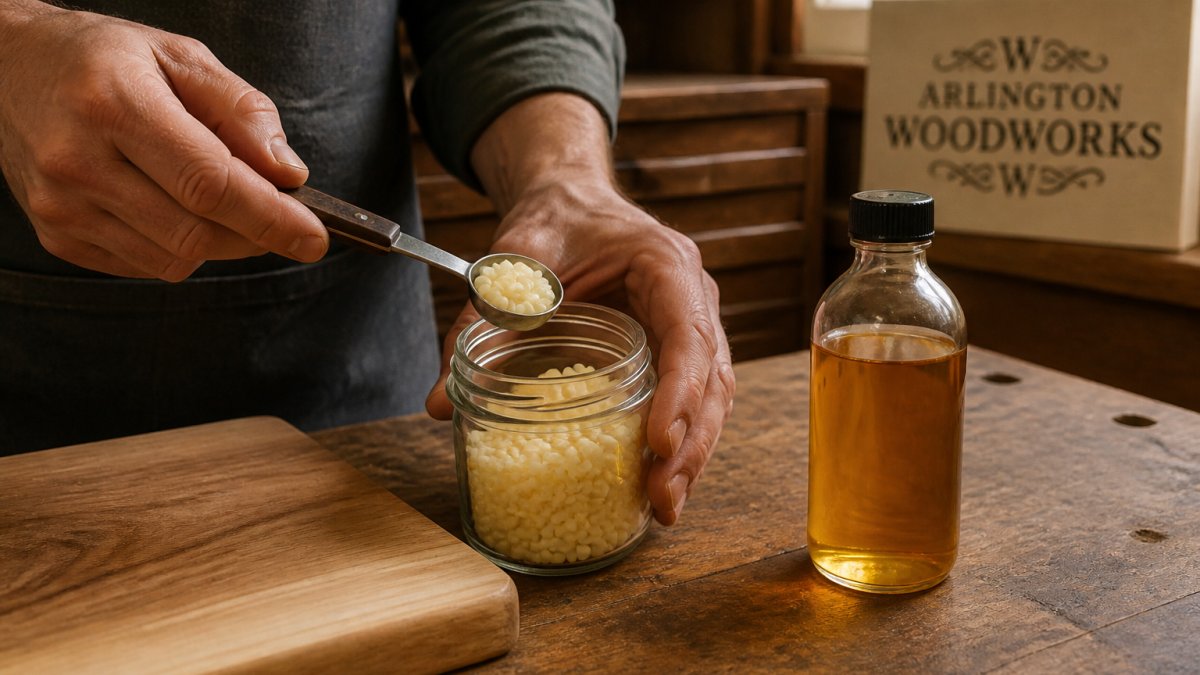
How to Soften Beeswax Before Mixing
Use gentle, indirect heat to soften or melt beeswax before combining it with the rest of your formulation.
A double boiler or water bath gives you much better control than direct heat. Warm the beeswax slowly and stir as needed until it is soft enough to blend smoothly.
Remove it from the heat before adding orange oil. Let the mixture cool slightly first, then add the orange oil according to the tested recipe you are following.
Avoid overheating the wax or heating orange oil directly. Work in a well-ventilated area and keep the mixture away from open flames or other ignition sources.
If you are making a homemade wood-care product, follow a proven formulation rather than improvising ingredient amounts during the heating process.
Orange Oil as Your Carrier Oil: Safety and Compatibility
Orange oil is not a neutral base oil. It is a concentrated citrus-derived solvent, which is why it can affect both the consistency of a wood-care product and the surface it is applied to.
In a finished formulation, orange oil can help soften the blend, improve spreadability, and contribute its characteristic citrus scent. It should not be treated as a cleaner, disinfectant, or sanitizer simply because it is citrus-derived.
A common approach is to use orange oil as one component of a broader formula alongside a more stable base oil, rather than using it as the entire oil phase.
Mixing Safely
When working with orange oil:
- Use good ventilation.
- Keep it away from open flames, pilot lights, sparks, and other ignition sources.
- Avoid direct contact with eyes and prolonged skin exposure.
- Follow the ingredient supplier's safety guidance and any applicable safety data sheet.
- Add it only after the heated wax mixture has been removed from direct heat and allowed to cool somewhat.
Surface Compatibility
Orange oil can interact differently with shellac, lacquer, varnish, oil finishes, waxes, and previously repaired surfaces.
Do not assume a homemade orange-oil mixture is safe for every wood finish. Test the finished product in a hidden area first and watch for dulling, softening, cloudiness, tackiness, color change, or an uneven sheen.
Food-Contact Surfaces
Food-contact suitability depends on the complete formulation and how the finished product is intended to be used.
For cutting boards, butcher blocks, utensils, and kitchen wood, use a product specifically intended for food-contact surfaces and follow its directions.
Artisan Furniture Wood Balm No. 524 is made with certified-organic flaxseed oil, beeswax, and orange oil and is made with food-safe ingredients for compatible food-contact wood when used as directed.

How to Apply Beeswax Wood Polish to Furniture
Start with a clean, completely dry surface. Remove dust and surface grime before applying any polish.
Apply a small amount of the finished polish with a soft, lint-free cloth and work in manageable sections. Use a thin layer rather than trying to build a heavy coating.
Follow the specific formulation or product directions for how long to leave it on the surface before buffing. Different wax-and-oil blends can behave differently.
Buff away all excess with a clean, dry cloth. The goal is an even surface with a soft sheen, not a thick or greasy layer.
Test the finished polish on a hidden area first, especially on antiques, veneer, unknown finishes, or previously refinished furniture.
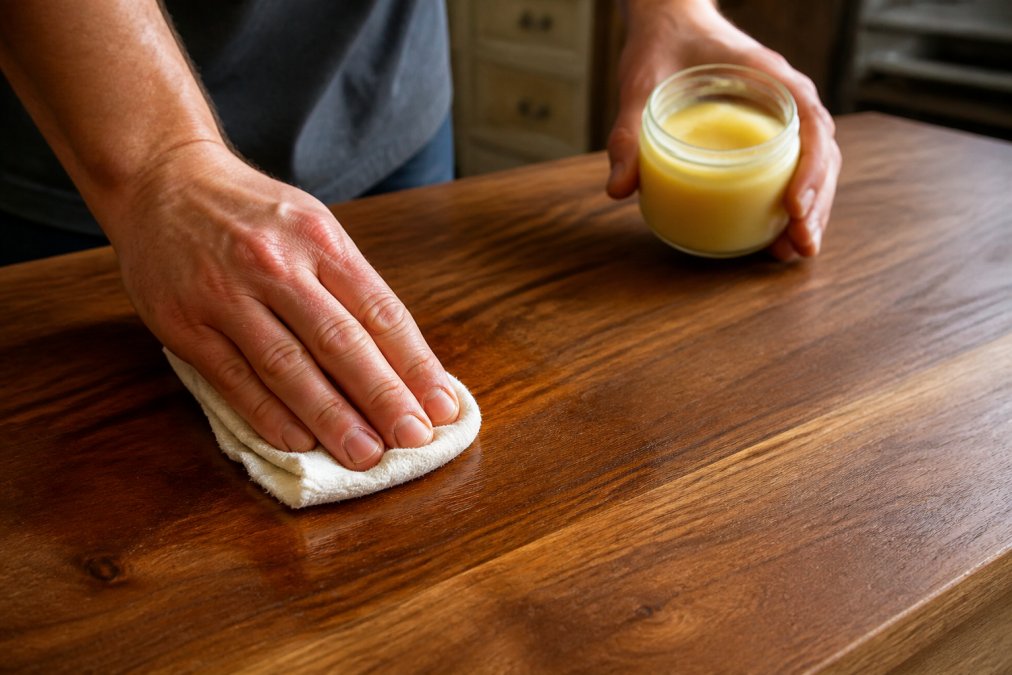
If you prefer a ready-made product, Transforming Your Wood Furniture: A Step-by-Step Guide to Using Arlington Woodworks No. 524 provides product-specific application guidance for No. 524.
Using Beeswax Polish for Cutting Boards and Food-Contact Wood
Food-contact suitability depends on the complete formulation, not simply on whether beeswax or orange oil is present.
For cutting boards, butcher blocks, wooden utensils, and other kitchen wood, use a finished product or tested formulation specifically intended for food-contact use and follow its directions.
Start with a clean, completely dry surface. Apply only the amount recommended for the product or formulation, work it evenly into the wood, and buff away any excess as directed.
Do not assume that every homemade beeswax-and-orange-oil mixture is appropriate for food-contact wood.
For a ready-made option, Artisan Furniture Wood Balm No. 524 is made with certified organic flaxseed oil, beeswax, and orange oil and is made with food-safe ingredients for compatible food-contact wood when used as directed.
Is Beeswax Safe for Food? What You Need to Know explains the food-safety considerations for beeswax on cutting boards and kitchen wood in more detail.
Storage, Shelf Life, and Troubleshooting Your Homemade Polish
Store a homemade wood polish in a tightly closed container that is compatible with the ingredients in your formulation.
Keep it in a cool, dark place away from direct sunlight, heat, flames, and other ignition sources. Because homemade formulations vary, do not assume a universal shelf life. Follow the guidance for the specific ingredients and recipe you used.
Before each use, inspect the mixture for unexpected separation, odor changes, discoloration, or another sign that the formulation may have changed.
ssue |
Possible Cause |
What to Do |
|---|---|---|
Polish too thick |
Too much wax or a cool storage temperature |
Follow the original formulation before making adjustments |
Polish too soft |
Too much liquid ingredient or warm storage conditions |
Recheck the recipe rather than adding ingredients by guesswork |
Sticky residue on wood |
Over-application or poor surface compatibility |
Stop adding product and buff away excess |
Mixture separates |
Formulation instability or settling |
Do not assume this is normal; check the recipe before reuse |
Finish looks dull or uneven |
Buildup, incompatibility, or uneven application |
Stop and assess the surface before applying another coat |
If the mixture or treated surface behaves differently than expected, avoid adding more wax, oil, or solvent until you understand the cause.
Start Your Wood Care Routine Today
If mixing your own wood-care product is not your preference, a ready-made formulation removes the guesswork around ingredient balance and application.
Artisan Furniture Wood Balm No. 524 is made with certified organic flaxseed oil, beeswax, and orange oil and is designed to help restore warmth, depth, and a soft natural sheen to compatible dry or dull wood.
Use it on a clean, completely dry surface, test a hidden area first, apply a small amount, let it absorb for a few minutes, and buff away all excess.
For homemade formulations, use a tested recipe and evaluate surface compatibility before applying it broadly.
Frequently Asked Questions
What is the best beeswax-to-oil ratio for wood polish?
There is no single ratio that works for every formulation. The balance between beeswax and the base oil affects whether the finished product is firm, soft, or more fluid. Orange oil should not be treated as a direct substitute for a base oil in a generic ratio. If you are making a homemade polish, use a tested recipe that specifies the amount of each ingredient separately rather than adjusting by guesswork.
Can you mix beeswax and orange oil safely?
Beeswax and orange oil can be used together in wood-care formulations, but orange oil is a concentrated citrus-derived solvent rather than a neutral carrier oil. Use a tested formulation, work with good ventilation, keep orange oil away from direct heat and ignition sources, and follow the supplier's safety guidance. Always test the finished product on a hidden area before applying it broadly to furniture.
Is beeswax and orange oil polish safe for cutting boards?
Food-contact suitability depends on the complete formulation. Artisan Furniture Wood Balm No. 524 is made with certified organic flaxseed oil, beeswax, and orange oil and is made with food-safe ingredients for compatible cutting boards, butcher blocks, wooden utensils, and kitchen wood when used as directed. For homemade mixtures, do not assume food-contact suitability based on the individual ingredients alone. Use a tested formulation intended for that purpose.
How do you soften beeswax to mix it with oil?
Use gentle, indirect heat such as a double boiler or water bath. Warm the beeswax slowly until it is soft or melted enough to blend with the rest of the formulation. Remove it from direct heat before adding orange oil, and allow the mixture to cool somewhat first. Avoid open flames, direct heat, and unnecessary overheating. Follow the tested recipe and ingredient safety guidance throughout the process.
The difference between wood that looks tired and wood that looks cared for often comes down to choosing the right product for the surface and using it correctly.
Beeswax, base oils, and orange oil can each play different roles in a wood-care formulation. The key is balance, surface compatibility, and proper application rather than assuming any one ingredient works the same way in every mixture.
Whether you use a tested homemade recipe or a ready-made balm, start with a clean, dry surface, test a hidden area first, and apply only what the wood and finish can appropriately accept.


