

Is Furniture Wax Worth It for Vintage Pieces
Last Updated: October 23, 2026
Quick Summary
Whether furniture wax is worth it for vintage pieces depends on the existing finish, how the piece is used, and the result you want.
Wax can add warmth, a soft sheen, and a light protective layer, but it is not a hard-wearing finish and may need periodic renewal depending on use.
- Wax can be a useful option on compatible vintage finishes, but test it on a hidden area first.
- Wax offers modest protection against dust, light handling, and minor moisture, but it will not prevent heat marks, water rings, or alcohol damage.
- Heavy or repeated application can create buildup, so apply thinly and buff thoroughly.
- Reapply based on appearance, use, and the product directions rather than a fixed schedule.
- For valuable, antique, or unknown finishes, use the least invasive approach and get professional guidance before making irreversible changes.
Table of Contents
- Furniture Wax for Vintage Pieces: When It Makes Sense
- The Real Benefits of Wax on Antique Furniture
- Limitations of Wax as a Long-Term Finish
- How to Wax Antique Furniture Safely
- Furniture Wax vs Oil for Wood: Which Suits Your Piece
- How to Care for Vintage Wood Furniture Between Applications
- Waxing Veneer Furniture: Special Considerations
- Verdict: Is Furniture Wax Worth the Investment
- Frequently Asked Questions
Furniture Wax for Vintage Pieces: When It Makes Sense
Furniture wax can be a good fit for vintage pieces, but it is not a universal solution. Whether it makes sense depends on the existing finish, how the piece is used, and the look and feel you want.
Wax adds a soft sheen, creates a light protective layer, and can make an older surface feel smoother and more finished. Its main limitation is durability: wax is softer than many film-forming finishes and will wear more quickly on high-use surfaces.
For a display piece or lightly used furniture in a stable indoor environment, that tradeoff may be completely reasonable. For a dining table or other everyday surface, wax can still work, but it should be paired with practical protection such as coasters, placemats, trivets, and careful handling.
The key is to match the finish to the piece rather than assuming wax is automatically the right answer for anything vintage.
The Real Benefits of Wax on Antique Furniture
Furniture wax can offer several useful benefits on compatible vintage and antique surfaces.
First, it can restore visual warmth. Older furniture often looks dull or muted, and a thin, well-buffed coat of wax can bring back depth and color without creating a heavy-looking finish.
Second, wax adds a light protective layer. It can help reduce the effect of dust, fingerprints, and everyday handling, especially on pieces that do not see heavy wear.
Third, wax is generally easier to renew or remove than many film-forming finishes. That can make it appealing for some vintage pieces where you want to avoid a more permanent coating.
Wax can also create a smooth, soft surface feel that many people prefer on older furniture. For pieces you touch and use regularly, that tactile quality can be part of the appeal.
Limitations of Wax as a Long-Term Finish
Wax has limits, especially on furniture that sees frequent use.
It is not a hard, highly durable finish, so hot dishes, standing moisture, alcohol, and heavy wear can still mark the surface. On dining tables and other high-use pieces, the wax layer will usually wear faster in areas that are touched or cleaned often.
Buildup can also become an issue if wax is applied repeatedly without enough buffing or without allowing the existing surface to guide whether another coat is actually needed. Over time, too much product can leave the surface looking dull, streaky, or tacky.
Wax also does not repair damage. Scratches, dents, stains, water rings, cracks, and failing finishes require a different approach.
On pieces with shellac, lacquer, varnish, polyurethane, or another existing finish, wax may behave differently depending on the condition of that surface. Test in a hidden area first and watch for clouding, softening, tackiness, or an uneven change in sheen before treating the whole piece.
How to Wax Antique Furniture Safely
Start with a clean, completely dry surface. Remove dust with a soft cloth before applying any product.
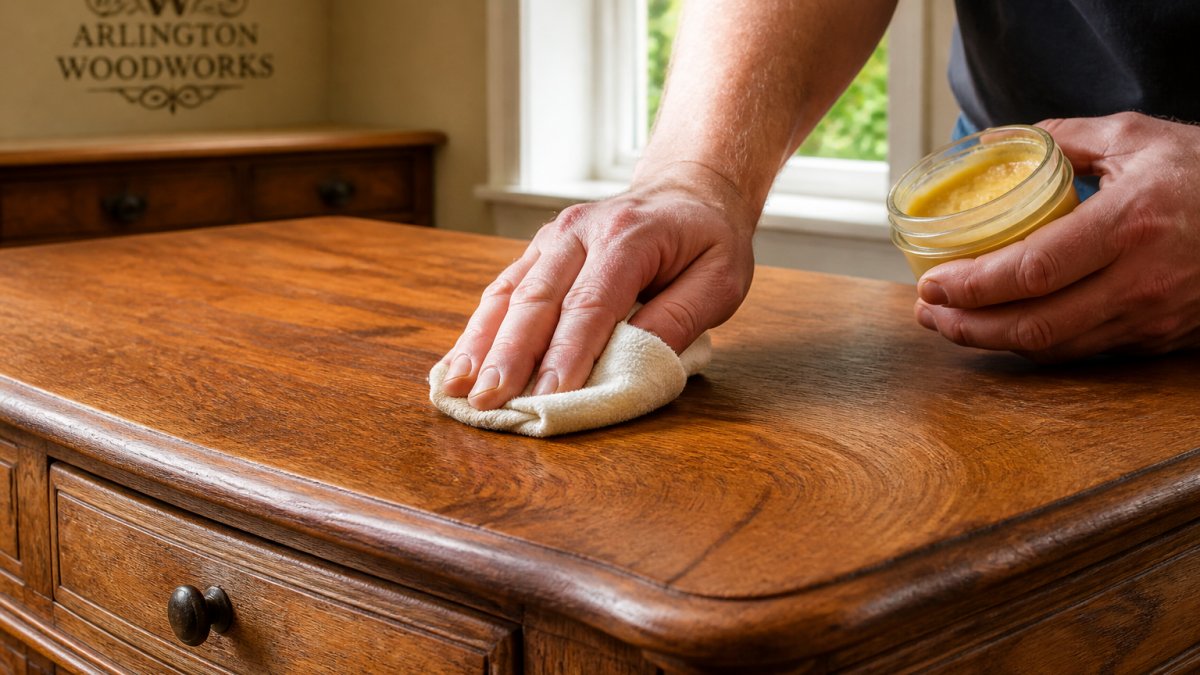
Hands applying wood balm with a soft cloth to a vintage wooden table surface, showing controlled circular buffing motions on warm honey-toned wood with natural side lighting
Apply a small amount of wax and work in manageable sections. Use a lint-free cloth for flat surfaces and a soft brush for carved trim, turned legs, grooves, and other detailed areas.
Thin application is usually better than heavy application. Follow the specific product directions for how long to let it sit, when to buff, and whether an additional coat is appropriate.
For food-contact surfaces such as cutting boards or wooden utensils, use a product specifically intended for that use and follow its directions. Artisan Furniture Wood Balm No. 524 is made with certified organic flaxseed oil, beeswax, and orange oil. Apply a small amount, work it evenly into the surface, let it absorb for a few minutes, and buff away all excess.

Artisan Furniture Wood Balm No. 524
Furniture Wax vs Oil for Wood: Which Suits Your Piece
Wax and oil behave differently, and the better choice depends on the existing finish, the type of wood, and the result you want.
Penetrating oils are generally designed to soak into bare wood or compatible oil-finished surfaces, where they can deepen color and highlight the grain. Wax tends to remain closer to the surface, creating a soft sheen and a smooth feel.
Neither option is automatically better for an unknown finish. If you do not know what is already on the piece, test the actual product in a hidden area first and follow the product manufacturer's directions.
Application and maintenance also vary by formulation. Some oils require wiping or buffing, some waxes are very simple to apply, and reapplication frequency depends more on the product, surface, and amount of use than on whether the product is labeled "wax" or "oil."
A simple comparison:
Characteristic |
Wax |
Oil |
|---|---|---|
Typical appearance |
Soft sheen |
Natural to low-sheen look |
Where it works best |
Compatible finished or previously waxed surfaces |
Bare or compatible oil-finished wood |
Surface feel |
Smooth, lightly polished |
More natural wood feel |
Application |
Usually applied thinly and buffed |
Depends on formulation |
Maintenance |
Based on wear, appearance, and product directions |
Based on wear, appearance, and product directions |
The most important factor is compatibility with the existing surface, not whether wax or oil is universally "better."
How to Care for Vintage Wood Furniture Between Applications
Between applications, keep your piece clean and dry. Dust regularly with a soft, lint-free cloth. For sticky residue, use a cloth that is only barely damp, then dry the surface promptly.
Avoid prolonged direct sunlight, which can fade wood and create uneven color over time. Try to keep the piece in a reasonably stable indoor environment, since repeated swings in temperature and humidity can stress wood joints, veneer, and existing finishes.
Keep furniture away from strong heat sources such as radiators, fireplaces, or heating vents when possible. Excessive heat can dry wood and finishes over time, while damp environments can introduce their own problems.
For dining tables and other high-use pieces, use coasters, placemats, and trivets. These simple habits help reduce water rings, heat marks, staining, and wear.
If a waxed surface becomes sticky, streaky, or unusually dull, stop adding more product. The issue may be buildup, contamination, or incompatibility with the existing finish. Identify the cause before applying another coat or attempting removal.
Waxing Veneer Furniture: Special Considerations
Veneer requires extra caution because the decorative wood layer is thin and older adhesive joints may already be fragile.
Avoid excess moisture, aggressive rubbing, sanding, or heavy product buildup. Water can work into damaged edges or seams, and too much pressure can stress loose or weakened veneer.
Do not assume wax or oil is automatically the safer choice. The right product depends on the existing finish, the condition of the veneer, and any previous repairs.
Test the actual product in a hidden area first, such as the underside of a drawer, the back of a leg, or another inconspicuous surface. Watch for unexpected changes in color, sheen, softness, tackiness, or surface texture before treating visible areas.
Apply lightly and avoid forcing product into open seams, cracks, or lifting edges.
If the veneer is loose, lifting, bubbling, or delaminating, stop and address the repair before applying any conditioner or finish. For valuable or antique veneer, professional furniture repair is often the safest choice.
Verdict: Is Furniture Wax Worth the Investment
For display pieces and lightly used vintage furniture, wax can be a good choice. A bookshelf, china cabinet, side table, or decorative piece may benefit from the soft sheen, smoother feel, and light surface protection wax can provide.
For high-use furniture such as dining tables and everyday work surfaces, wax can still be useful, but it should be paired with practical protection such as coasters, placemats, and trivets. How well it performs will depend on the existing finish, the product used, and how much wear the surface receives.
For valuable or historically significant antiques, preservation should come first. A compatible wax may be appropriate in some cases, but test carefully and consider professional guidance before treating an original or unknown finish.
The real appeal of wax is not heavy-duty protection. It is the combination of visual warmth, soft sheen, and surface feel it can add to compatible wood finishes.
If you care for several pieces and want a simple conditioner for compatible furniture and kitchen wood, Arlington Woodworks' Artisan Furniture Wood Balm No. 524 offers one straightforward option.
For homeowners and collectors who want an easy application setup, the Starter Kit pairs No. 524 with a palm wax brush for controlled application on tabletops and detailed areas. If you maintain several pieces, the Home Care Kit keeps additional balm on hand for future care.


The choice to wax vintage furniture comes down to your piece, your use, and your maintenance commitment.
Frequently Asked Questions
Is furniture wax good for vintage furniture?
Furniture wax can be a good choice for vintage pieces when it is compatible with the existing finish. It can add a soft sheen, restore visual warmth, and provide light surface protection. It is not a hard-wearing finish, though, and it will not repair scratches, stains, water rings, or failing finishes. For valuable antiques or pieces with an unknown finish, test the product in a hidden area first and consider professional guidance before treating the entire surface.
Can you wax furniture with an unknown finish?
Proceed cautiously with unknown finishes. Wax may work well on some surfaces and poorly on others, depending on what is already on the piece and the condition of that finish. Test the actual product in a hidden area first and watch for changes in color, sheen, softness, tackiness, or surface texture. For valuable or historically significant pieces, professional advice may be the safest approach.
How often should you wax vintage furniture?
There is no single schedule that fits every piece. Reapply based on how the surface looks and feels, how much use it receives, and the directions for the specific product. If the furniture still looks even and feels properly conditioned, there may be no reason to add more wax. If it begins to look dull or worn, reassess the surface before applying another thin coat.
What's the difference between furniture wax and oil for wood?
Wax and oil behave differently depending on their formulation. Wax generally stays closer to the surface and can create a soft sheen and smooth feel. Penetrating oils are typically intended to soak into bare wood or compatible oil-finished surfaces and can deepen the appearance of the grain. Neither option is universally better. The right choice depends on the existing finish, the product formulation, and the result you want.
Does wax protect antique wood furniture from scratches and stains?
Wax provides light surface protection and may help reduce minor wear from dust, handling, and everyday contact. It is not a hard protective coating, so deeper scratches, standing moisture, heat, alcohol, and significant staining can still damage the underlying surface. Wax is best viewed as a light protective and aesthetic layer rather than a substitute for a durable finish.


