

Best Wood Balm for Furniture: 2026 Buyer's Guide
Table of Contents
- What to Look for in the Best Wood Balm for Furniture
- Best Wood Balm for Furniture: Comparison Table and Pricing
- How to Restore Dull Wood Furniture With a Balm
- Choosing a Food-Safe Wood Finish for Cutting Boards and Kitchen Wood
- Long-Term Maintenance Schedules and Sustainable Sourcing
- Which Wood Balm Fits Your Project?
- Conclusion
- Frequently Asked Questions
Last Updated: October 4, 2026
What to Look for in the Best Wood Balm for Furniture
The best wood balm for furniture combines quality oils and waxes that condition compatible wood and leave a soft, natural sheen. At Arlington Woodworks, we make ours from three ingredients: certified-organic flaxseed oil, beeswax, and orange oil.

That short list matters more than any marketing claim. A balm is a wood conditioner and protective finish, not a cleaner or a repair product. It brings back warmth and depth to dry, dull wood. It will not erase a scratch, lift a water ring, or rebuild a failing film finish.
Below, we break down what separates a balm that feeds wood from one that just sits on top of it, then compare the options we make and show you how to apply them without the mistakes that leave a greasy film.
Ingredients That Decide Whether a Balm Works
Three ingredient families do the real work in any wood balm: a drying oil, a wax, and optionally a natural solvent or scent.
- Drying oils such as flaxseed, tung, or walnut oil penetrate the wood grain and cure over time, feeding thirsty wood from the inside.
- Waxes such as beeswax or carnauba wax form a thin moisture barrier on the surface, adding sheen and slowing water absorption.
- Natural solvents and scents such as orange oil help the balm spread evenly and carry a clean scent without petroleum distillates.
A common mistake is buying a product built mostly on mineral oil and paraffin. Different oils behave differently in wood. Drying oils such as flaxseed oil cure over time, while non-drying oils such as mineral oil remain liquid. If you prefer a balm that cures rather than remaining as a non-drying oil treatment, look for a drying oil combined with a quality wax.
Wood Balm vs. Furniture Polish: What Actually Protects
Furniture polish generally works at the surface. A wood balm is designed to condition compatible bare, oil-finished, or waxed wood while leaving a protective wax layer behind.
Most spray polishes are silicone or petroleum-based and are designed for film-sealed surfaces such as lacquer or polyurethane. They add shine and remove fingerprints, but they do not feed the wood underneath.
A balm works differently. The oil penetrates and hydrates; the wax cures into a thin, breathable layer. That is why we recommend a balm for bare, oiled, or waxed surfaces, and a polish only for intact film finishes.
If you are unsure whether a piece has a film finish, test the balm in a small hidden area first. If it sits on the surface rather than working in cleanly, stop and reassess the finish.
On antiques and heirlooms, test a hidden area before touching the visible surface.
Best Wood Balm for Furniture: Comparison Table and Pricing
Every product we make starts from the same balm, so the real choice is how much you need and whether you want the application brush. Here is how the lineup compares.
Product |
What's Included |
Price |
Best For |
|---|---|---|---|
1 jar of balm |
$44.99 |
Single pieces, trying the balm first |
|
1 jar + palm wax brush |
$79.98 |
Beginners, one or two favorite pieces |
|
2 jars + palm wax brush |
$115.99 |
Regular care across several rooms |
|
3 jars + palm wax brush |
$149.99 |
Larger homes, frequent wood care |
|
Brush only |
$34.99 |
Controlled application on trim and detail |
Artisan Furniture Wood Balm No. 524 is the core product: a small-batch balm made with organic flaxseed oil, beeswax, and orange oil. One jar goes a long way, which is why it is our pick for anyone caring for a single table, cabinet, or cutting board. Shop Artisan Furniture Wood Balm No. 524

The Starter Kit pairs one jar with our Premium Artisan Palm Wax Brush, an ergonomic palm brush with dense natural bristle and a rust-resistant ferrule.
The Home Care Kit adds a second jar so you are not caught short mid-project. If you maintain a dining table, a few cabinets, and a couple of cutting boards, this is the sensible middle ground.
The Whole-Home Kit includes three jars and the brush. It suits larger homes and households with several wood surfaces to keep up with, and it means you always have balm on hand when a surface starts looking dry.
The honest limitation: a balm conditions; it does not clean. If your piece is grimy, remove grease and grime with a damp cloth and a mild soap first, let the wood dry completely, and then apply the balm.
How to Restore Dull Wood Furniture With a Balm
Refreshing dull wood with a balm is straightforward: clean, dry, apply, and buff.
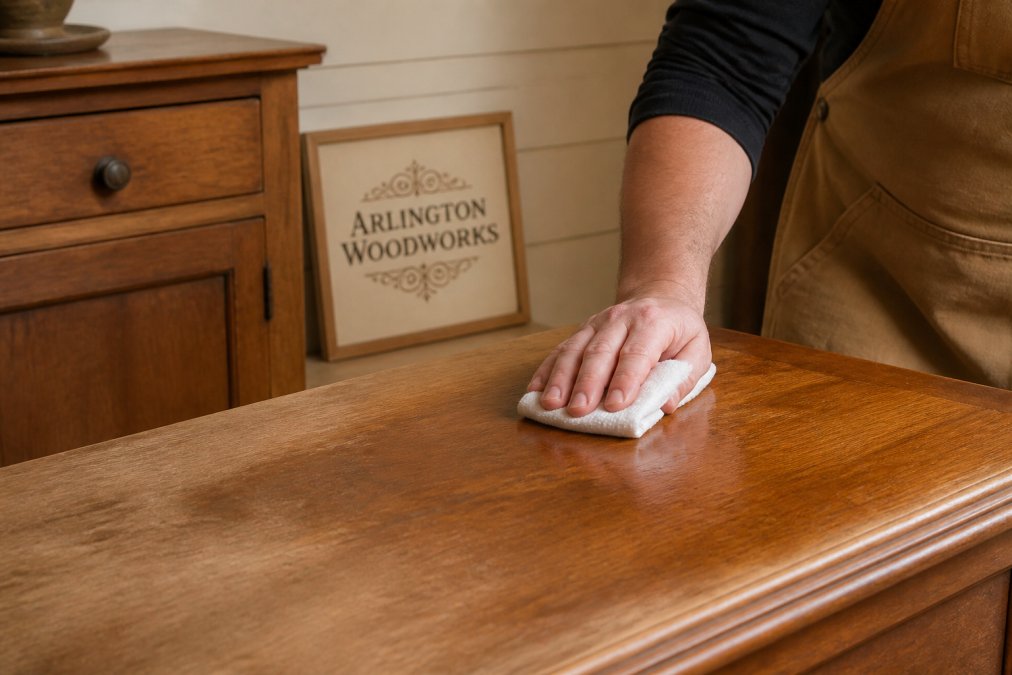
- Clean the surface. Wipe away dust, grease, and grime with a damp cloth and mild soap.
- Let it dry completely. Moisture trapped under wax is the fastest route to a blotchy result. Give the wood time to dry fully before you start.
- Apply a small amount. Scoop a little balm and work it in with circular motions. A little goes a long way; you can always add more.
- Let it absorb for a few minutes, then buff away all excess with a clean, dry cloth until the surface feels dry to the touch, not tacky.
For larger surfaces such as tabletops, load the palm brush lightly and work in thin, even passes, then buff. Test a hidden area first, especially on antiques, and follow the manufacturer's instructions if the existing finish is unknown.
Fixing Common Application Errors
Most balm problems come from too much product, not too little.
- Greasy, tacky surface: you left excess on. Buff again with a clean cloth. If it still feels slick, you applied too heavy a coat.
- Blotchy or uneven sheen: buff away any excess and allow the surface to settle. If the appearance remains uneven, reassess the existing finish before applying more product.
- Balm sitting on top: the surface is likely film-sealed. A penetrating balm cannot soak into polyurethane or lacquer. Use it on bare or oil-finished wood instead.
- Dust stuck in the wax: you buffed too soon or worked in a dusty room. Wipe down first, and buff in a clean space.
Choosing a Food-Safe Wood Finish for Cutting Boards and Kitchen Wood
A food-safe wood finish for cutting boards is one made from ingredients safe for food-contact surfaces when used as directed. Artisan Furniture Wood Balm No. 524 is made with food-safe ingredients and is appropriate for cutting boards, butcher blocks, wooden utensils, and kitchen wood.
The key distinction is removable versus installed. A cutting board or butcher block you can carry to the sink is easy to condition: clean it, dry it completely, apply a small amount of balm, let it absorb, and buff off the excess.
Two things to keep straight:
- Bare or oil-finished wood can readily accept a balm and may benefit from periodic conditioning.
- Film-sealed wood should be maintained according to the finish maker's instructions.
For sanitation, follow authoritative guidance rather than folklore. The USDA Food Safety and Inspection Service guidance on cleaning and sanitizing and your local university extension program both publish practical kitchen-surface advice. Do not rely on vinegar as a sanitizer, and do not mix bleach or hydrogen peroxide with other chemicals unless an authoritative source gives you exact instructions.
Long-Term Maintenance Schedules and Sustainable Sourcing
Surface |
How Often |
Why |
|---|---|---|
Dining tables, desks |
Every 3-6 months |
|
Kitchen cabinets |
Every 6-12 months |
|
Cutting boards in daily use |
Monthly, or when dry |
|
Antiques and heirlooms |
Once or twice a year |
|
Decorative wood décor |
Annually |
These are starting points, not rules. Dry climates, forced-air heating, and direct sun all pull moisture out faster, so check the wood by feel. If it looks pale and thirsty, it is due.
On sourcing, ask what is in the jar and where it comes from. We use certified-organic flaxseed oil, beeswax, and orange oil, package in recyclable glass, and give 10% of proceeds to charity. That is the standard we would hold any balm to: a short, traceable ingredient list and packaging you can recycle.
Which Wood Balm Fits Your Project?
Match the kit to the job, not the other way around.
- One table, one board, or a first try: Artisan Furniture Wood Balm No. 524 on its own.
- New to wood care, one or two pieces: the Starter Kit, so you get the brush and learn even application.
- Several surfaces, regular routine: the Home Care Kit.
- A whole house of wood: the Whole-Home Kit.
- Detail work on trim, legs, and edges: the Premium Artisan Palm Wax Brush.
The throughline is simple: buy the amount of balm your home will actually use, and add the brush if you want smoother, more controlled passes.

Conclusion
Dry, dull wood is a maintenance problem, not a lost cause, and the fix is a balm you apply before the surface cracks or fades. Choose a conditioner built on a drying oil and real wax, apply it thin, and buff off the excess.
Arlington Woodworks makes that straightforward. Our Artisan Furniture Wood Balm No. 524 is a small-batch blend of certified-organic flaxseed oil, beeswax, and orange oil that restores warmth and depth to tired wood, protects everyday surfaces with a soft wax finish, and is safe for food-contact surfaces when used as directed. Pair it with our Premium Artisan Palm Wax Brush for even, controlled application.
Get started with Arlington Woodworks and bring your furniture, cabinets, and kitchen wood back to life.
Frequently Asked Questions
What is the best wood balm for furniture?
The best wood balm for furniture depends on the finish and use. For dry, dull wood that needs conditioning, look for a balm made with natural ingredients like flaxseed oil, beeswax, and orange oil. Artisan Furniture Wood Balm No. 524 fits that description and is safe for food-contact surfaces when used as directed. Test a hidden area first, and follow the manufacturer's instructions if the existing finish is unknown.
How do I restore dull wood furniture without stripping the finish?
Start with a clean, completely dry surface. Apply a small amount of balm, let it absorb for a few minutes, then buff away all excess with a clean cloth. This restores warmth, depth, and luster to dry or dull wood without stripping. If the finish is film-sealed or unknown, check the surface manufacturer's instructions first. A balm conditions wood; it does not repair scratches, stains, or water rings.
Is wood balm safe for cutting boards and kitchen surfaces?
A food-safe wood finish for cutting boards should be made with food-safe ingredients and applied as directed. Artisan Furniture Wood Balm No. 524 is made with certified-organic flaxseed oil, beeswax, and orange oil and is appropriate for cutting boards, butcher blocks, wooden utensils, and kitchen wood when used as directed. For food-safety and sanitation guidance, check authoritative sources such as USDA, FDA, CDC, or university extension programs.
How often should you apply wood balm to furniture?
Frequency depends on use, climate, and how dry the wood becomes. If the wood looks dull, feels dry, or drinks up the balm quickly, it is time to reapply. High-use pieces like dining tables and cutting boards may need attention more often than decorative items. Always start with a clean, completely dry surface and buff away all excess.
Can wood balm fix deep scratches or water rings?
No. Wood balm is a wood conditioner and protective finish, not a repair product. It restores warmth, depth, and luster to dry or dull wood, but it does not repair damaged finishes, scratches, stains, water rings, cracks, or structural damage. For deep damage, consult a furniture restoration professional. For everyday dryness and dullness, a balm is the right tool.


