

5 Long Lasting Natural Wood Conditioners for 2026
Table of Contents
- Quick Comparison: 5 Natural Wood Conditioners
- How We Evaluated These Long Lasting Natural Wood Conditioners
- 1. Artisan Furniture Wood Balm No. 524: Best for Cutting Boards and Furniture
- 2. Howard Butcher Block Conditioner: Best for Heavy Kitchen Use
- 3. Odie's Oil: Best for a Harder Wax Finish
- 4. Walrus Oil Cutting Board Oil: Best for Simple Oil-Only Care
- 5. Daddy Van's All Natural Beeswax Furniture Polish: Best for Antiques and Detailed Pieces
- How to Condition Wood Furniture Without a Sticky Finish
- Frequently Asked Questions
Last Updated: October 19, 2026
Quick Comparison: 5 Natural Wood Conditioners
A natural wood conditioner is a maintenance product that penetrates bare or oil-finished wood to help restore warmth, depth, and luster while adding a thin layer of protection. Most options are oil-and-wax blends.
Here is the short version before the details:
Product |
Formulation |
Best For |
Food-Contact |
Price |
|---|---|---|---|---|
Organic flaxseed oil, beeswax, orange oil |
Cutting boards, butcher blocks, furniture |
Yes, when used as directed |
$44.99 |
|
Howard Butcher Block Conditioner |
Mineral oil, beeswax, carnauba wax |
Heavy kitchen use |
Yes, per label |
Varies by retailer |
Odie's Oil |
Oil and wax blend |
A harder wax finish |
Check label |
Varies by retailer |
Walrus Oil Cutting Board Oil |
Oil blend |
Simple oil-only care |
Yes, per label |
Varies by retailer |
Daddy Van's Beeswax Polish |
Beeswax blend |
Antiques and detailed pieces |
Check label |
Varies by retailer |
How We Evaluated These Long Lasting Natural Wood Conditioners
Most roundups of natural wood conditioners list ingredients and stop there. Longevity in wood care is not a single number you can print on a label.

What "Long Lasting" Actually Means for a Conditioner
A conditioner's useful life depends on four variables no product controls on its own:
- Wood species and porosity. Open-grained woods absorb and release conditioner differently than tight-grained ones; hard maple, teak, and oak all behave differently.
- Existing finish. Bare and oil-finished wood accept conditioner directly. Film-sealed surfaces (polyurethane, lacquer, varnish) sit under a barrier, so a conditioner primarily affects the surface sheen rather than penetrating. If you do not know the finish, follow the surface manufacturer's instructions and test a hidden area first.
- Use and washing. A board washed after every use sheds conditioner faster than an occasionally wiped cabinet door. Installed butcher-block countertops present a different maintenance picture than a removable board you can take to the sink.
Because of these variables, we did not assign a single "lasts X months" rating. Instead, we compared what each maker states about reapplication, how each formulation is likely to behave, and how practical it is to reapply.
The Criteria We Compared
Each product was assessed on the same dimensions:
- Formulation transparency. Does the maker disclose the full ingredient list, with oils and waxes named specifically?
- Intended use. Is it designed for kitchen wood, furniture, antiques, or new-project finishing? A product built for one job may underperform on another.
- Food-contact suitability where applicable. Does the maker state that the product is appropriate for food-contact surfaces when used as directed? We report what the label says and point you to USDA Food Safety and Inspection Service guidance and FDA food-contact information for the underlying food-safety questions rather than treating any product page as the authority.
- Application method and effort. Some products buff out in minutes; others reward thin coats and longer cure windows. It is noted which is which so you can match the product to the time you will spend.
- Sheen and finish character. A soft luster, a satin sheen, and a harder wax finish are different outcomes. What each product is formulated to produce is described.
- Maintenance and reapplication. What each maker says about reapplication and what signs indicate the wood needs attention is compared, using condition-based guidance rather than rigid calendars.
- Value. Price per unit where published is compared, and it is noted when a product is widely available at variable retail pricing.
What We Did Not Do
Laboratory durability tests were not run, and no claim is made to have done so. Claims about how long a product lasts on a specific wood should come from the manufacturer's directions or your own experience. What can be done is to lay out formulation, intended use, and maintenance guidance side by side.
A Note on Pre-Stain Conditioners
Pre-stain wood conditioners are a different product with a different job: applied to bare wood before staining to help reduce blotching on porous species. The five products compared here are maintenance conditioners for wood that is already finished or bare and needs ongoing care. If you are preparing raw wood for a stain, you want a pre-stain product, not any of these.
1. Artisan Furniture Wood Balm No. 524: Best for Cutting Boards and Furniture
Artisan Furniture Wood Balm No. 524 is made from three ingredients: certified organic flaxseed oil, beeswax, and orange oil. It is a conditioner and protective finish, not a cleaner, sanitizer, or repair product.
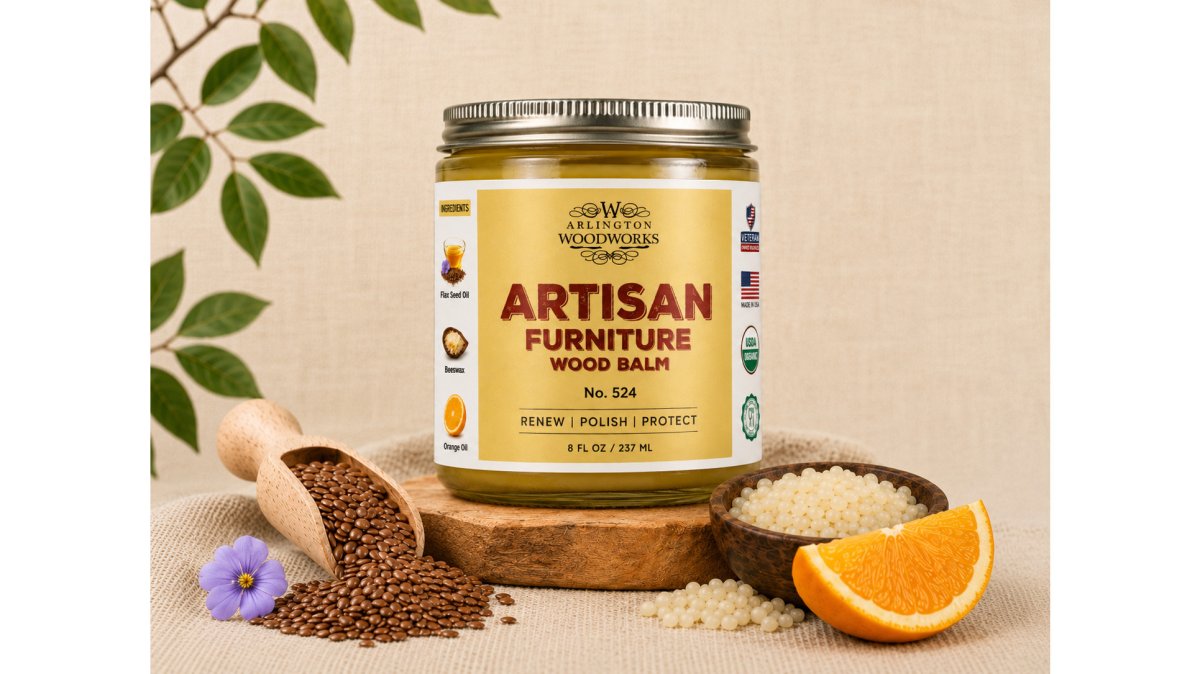
(https://www.fsis.usda.gov/policy/fsis-guidelines) and [FDA food-contact information](https://www.fda.gov/about-fda/contact-fda) are the sources to check rather than any product page.
Where It Fits Best
This is the pick for a household that wants one product for both the kitchen board and the dining table. The wax content gives more protection than a plain oil, and the balm buffs to a low sheen that suits furniture. If you are new to wood care, the Starter Kit pairs a jar with a palm wax brush for more even application.

2. Howard Butcher Block Conditioner: Best for Heavy Kitchen Use
Howard's butcher block conditioner blends mineral oil, beeswax, and carnauba wax, and it is a familiar name in kitchens that see daily board work. The mineral oil base penetrates readily, while the waxes add surface protection. It is widely available and inexpensive per ounce, making it practical for a board that gets washed and re-oiled often. The tradeoff: mineral oil is a petroleum derivative, so shoppers seeking plant-based ingredients should look at the other options here.
3. Odie's Oil: Best for a Harder Wax Finish
Odie's Oil is positioned as a wood finish for furniture, tables, and other wood surfaces where a more substantial finish is desired. It is commonly applied in thin coats and buffed thoroughly, making application technique important. For exact cure, maintenance, and food-contact guidance, follow the manufacturer's directions for the specific product.
4. Walrus Oil Cutting Board Oil: Best for Simple Oil-Only Care
Walrus Oil's cutting board oil keeps things simple: an oil blend with no wax, meant to penetrate and condition bare kitchen wood. If you prefer an oil-only routine and want to avoid wax buildup on a board you use constantly, this is a reasonable fit. Because it is an oil-focused product rather than a wax-and-oil balm, it gives users a different maintenance approach and surface feel. Reapplication should follow the maker's guidance and the condition of the wood.
5. Daddy Van's All Natural Beeswax Furniture Polish: Best for Antiques and Detailed Pieces
Daddy Van's beeswax polish is aimed at furniture rather than kitchen wood, and its beeswax-forward formula suits antiques, carved details, and pieces where a soft luster matters more than heavy protection. On intricate trim and turned legs, a wax polish can be easier to control than a penetrating oil. It is not the pick for a cutting board, and on a valuable antique you should still test a hidden spot and consult a professional before any irreversible work.
How to Condition Wood Furniture Without a Sticky Finish
A sticky or tacky finish almost always comes from too much product or too little buffing, not from the product itself. The fix: use less, work it in, and buff away every bit of excess. Getting a clean result also depends on matching the product to the surface and knowing when to stop adding more.
Step-by-Step Application
- Clean and dry the surface completely. Conditioner will not absorb over dust, moisture, or old cleaner residue. On kitchen wood, follow the manufacturer's cleaning instructions before conditioning.
- Test a hidden area first, especially on antiques, veneer, or any finish you cannot identify. This is the least invasive way to confirm the product behaves as expected on your piece.
- Apply a small amount and work it in with circular motions using a soft cloth or brush. A little goes further than most people expect, particularly with wax-containing balms.
- Let it absorb for a few minutes, following the manufacturer's directions for the specific product. Do not let excess sit indefinitely.
- Buff away all excess with a clean, dry cloth. This step prevents tackiness. Buff longer than feels necessary, the difference between a soft sheen and a greasy film is usually in the second pass.
- Reapply based on condition, not a calendar. When the wood begins to look dry, dull, or noticeably less conditioned, it may be time for another light application. Treat any suggested interval as a starting point.
Why Sticky Finishes Happen
Three common causes:
- Too much product on the surface. Wax-heavy balms and polishes are especially prone. A thin, fully buffed coat outperforms a thick coat every time.
- Applying over a film finish without buffing. On polyurethane, lacquer, or varnish, conditioner sits on top rather than penetrating. That is fine for restoring luster, but excess must be buffed off completely or it will feel tacky.
- Skipping the dry-surface step. Moisture or cleaner residue under the conditioner prevents absorption and leaves a film.
Matching the Product to the Surface
A few distinctions that affect application and longevity:
- Removable cutting boards vs. installed butcher-block countertops. A removable board can be conditioned at the sink and left to absorb fully. An installed countertop needs a product you can apply in place, buff clean, and use again within a reasonable window, follow the countertop manufacturer's instructions for cleaning and conditioning.
- Bare or oil-finished wood vs. film-sealed surfaces. Bare and oil-finished wood accepts conditioner directly and benefits from penetration. Film-sealed surfaces get a surface-level sheen refresh, not penetration. If you do not know which you have, treat the piece as unknown and test a hidden area first.
- Furniture vs. kitchen wood. A furniture balm and a cutting-board oil may share ingredients but are formulated for different routines. A kitchen product on furniture may not deliver the sheen or protection you want; a furniture polish not labeled for food contact should not be used on a cutting board.
Reapplication Signals to Watch For
Rather than a fixed schedule, watch for these condition-based signs that the wood is ready for another coat:
- The surface looks dull or dry compared to how it looked after the last application.
- The wood feels rough or dry to the touch in areas that get handled most.
For a full routine across several pieces, the Home Care Kit bundles two jars with the brush. For food-safety and sanitation questions on kitchen wood, rely on USDA Food Safety and Inspection Service guidance and FDA food-contact information rather than any product page.

Frequently Asked Questions
What is the difference between wood conditioner and pre-stain conditioner?
A maintenance wood conditioner, such as a natural oil or wax balm, is used on finished or bare wood to condition the surface and help restore warmth and luster over time. A pre-stain wood conditioner is a separate product applied to bare wood right before staining to help stain absorb more evenly and reduce blotching. They are not interchangeable, so check which job you actually need before buying.
How often should you condition wood furniture?
There is no single calendar rule. Base it on condition and use: a dining table used daily may need attention more often than a display cabinet, and kitchen wood that gets washed regularly usually needs conditioning sooner than furniture. Check the surface periodically and base reapplication on condition rather than a rigid schedule. When the wood begins to look dry, dull, or noticeably less conditioned, clean the surface, apply a small amount of conditioner, and buff away the excess according to the product directions.
Can natural wood conditioner be used on cutting boards?
Yes, if the product is intended for food-contact surfaces and you follow its directions. Artisan Furniture Wood Balm No. 524 is made with food-safe ingredients including organic flaxseed oil, beeswax, and orange oil, and it is appropriate for cutting boards, butcher blocks, and wooden utensils when used as directed. Start with a clean, completely dry surface, apply a small amount, let it absorb for a few minutes, and buff away all excess. Test a hidden area first.
How do you apply wood conditioner without leaving a sticky finish?
Apply less than you think you need. Begin with a clean, completely dry surface, work the product in with a cloth or brush, give it a few minutes to absorb, then buff away all excess with a clean cloth. Sticky residue usually means too much product was left on the surface. For larger pieces, load a brush lightly and work in thin, even passes before buffing. Always test a hidden area first, especially on antiques or unknown finishes.
Can I use a natural wood conditioner on antique furniture?
Often yes, but with care. On antiques, veneer, or any piece with an unknown finish, test a hidden area first and follow the surface manufacturer's instructions if the finish is known. Conditioning can help restore warmth and depth to dry or dull wood, but it does not repair scratches, stains, cracks, or damaged finishes. For valuable or historically significant pieces, get professional advice before any irreversible work.


