

Safe Wood Finish for Kitchens: A 2026 Guide
Table of Contents
- What Makes a Wood Finish Food-Safe for Kitchens
- Food-Safe Cutting Board Finish: Oils and Wax Blends
- Food-Safe Finish for Butcher Block Countertops
- How to Oil a Wooden Cutting Board: Step-by-Step Application
- Food-Safe Clear Coat for Wood: Understanding Your Options
- Common Mistakes When Finishing Kitchen Wood
- Maintaining and Reapplying Your Food-Safe Wood Finish
- Frequently Asked Questions
Last Updated: October 11, 2026
What Makes a Wood Finish Food-Safe for Kitchens
A safe wood finish for kitchens is one that doesn't leach harmful chemicals into food or water.
A wood finish used in the kitchen should be appropriate for the specific surface and intended use, especially when that surface comes into contact with food.
The most important things to check are the product's formulation, the manufacturer's intended-use guidance, and whether the finish has been applied and cured according to the directions.
Most wood finishes fall into two broad categories: those that penetrate into the wood and those that form a film on top of it. Both can have a place in kitchen wood care, but they behave differently and are not interchangeable.
For cutting boards, butcher blocks, utensils, and other food-contact surfaces, use a product that the manufacturer identifies as appropriate for that application and follow the directions for preparation, application, and cure time.
Penetrating Finishes vs. Film-Forming Finishes
Penetrating finishes are designed to soak into the wood rather than build a thick coating on top. Oils and many oil-and-wax blends fall into this category. They can enhance the look and feel of the wood while leaving a more natural surface texture.
Film-forming finishes create a more continuous coating on top of the wood. Shellac, polyurethane, and varnish are common examples. These finishes create a stronger surface barrier but behave differently under cutting, washing, heat, and repeated wear.
For cutting boards, utensils, and other surfaces that see frequent direct contact with food and tools, many people prefer penetrating finishes because they are easy to refresh and do not rely on a thick surface film.
Film-forming finishes may be appropriate for other kitchen surfaces, but suitability depends on the specific product, how the surface is used, and the manufacturer’s guidance.
The trade-off is maintenance. Penetrating finishes generally need periodic reapplication, while film-forming finishes can last longer but may require more involved repair if the coating becomes damaged.
Cure Time, Drying Time, and When It's Safe to Use
Drying time and curing time are not the same thing.
A finish can feel dry to the touch while it is still continuing to harden or stabilize. That is why a surface may seem ready before the product has actually reached its full cure.
Dry-to-the-touch means the surface no longer feels wet or tacky.
Fully cured means the finish has completed the curing process described by the manufacturer and is ready for its intended use.
The actual timeline depends on the product formulation, how much was applied, the wood itself, temperature, airflow, and humidity. Some finishes cure relatively quickly, while others can take much longer.
For kitchen and food-contact surfaces, follow the specific product directions rather than relying on a universal number of hours or days.
Food-Safe Cutting Board Finish: Oils and Wax Blends
Cutting boards experience repeated washing, cutting, drying, and food contact, so the finish needs to be appropriate for that kind of use.
Penetrating oils and oil-and-wax blends are commonly used on cutting boards because they can condition the wood without creating a thick surface coating.
A good cutting-board finish should be easy to apply, easy to refresh, and specifically identified by the manufacturer as appropriate for food-contact wood.
Oil-and-wax blends can combine the conditioning characteristics of an oil with the surface feel of a wax. How they perform depends on the specific oils, waxes, and other ingredients in the formula, so always follow the product directions rather than assuming all blends behave the same way.
Organic Flaxseed Oil and Beeswax Blends
Flaxseed oil is a drying oil that gradually hardens as it cures. Beeswax can change the feel of the finished surface and add a soft wax layer on top of the wood.
Blends that combine flaxseed oil with beeswax are commonly used for wood care because they bring together the penetrating qualities of an oil with the surface characteristics of a wax.
Performance depends on the full formulation, application method, and cure process. For food-contact surfaces, use only products the manufacturer identifies as appropriate for that purpose and follow the directions for application and cure time.
Arlington Woodworks' Artisan Furniture Wood Balm No. 524 is made with certified-organic flaxseed oil, beeswax, and orange oil and is appropriate for cutting boards, butcher blocks, wooden utensils, and other kitchen wood when used as directed.

Application starts with a clean, completely dry surface and a small amount of product.
Plant-Based Oils: Walnut, Coconut, and Olive Oil
You will see several plant-derived oils recommended for cutting boards and kitchen wood, including walnut, coconut, and olive oil.
The important point is that these oils do not all behave the same way. Their stability, drying behavior, surface feel, and maintenance needs can vary significantly from one product to another.
Rather than choosing an oil simply because it is edible or plant-based, look for a product that is specifically intended for wood care and identified by the manufacturer as appropriate for food-contact surfaces.
Ingredient transparency matters, but so does formulation. A purpose-made oil or oil-and-wax blend gives you clearer application guidance and a more predictable maintenance routine than choosing a household cooking oil based on ingredients alone.
Food-Safe Finish for Butcher Block Countertops
Butcher block countertops are installed surfaces, so they need a different care approach than removable cutting boards. They are exposed to regular moisture, spills, heat, and daily wear, and the finish needs to be appropriate for both the wood and the way the countertop is used.
For installed butcher block, follow the countertop or finish manufacturer's care guidance whenever it is available.
Protecting Installed Butcher Block from Heat and Moisture
Butcher block is porous, so repeated exposure to water and heat can affect the wood over time.
Oil and oil-and-wax finishes can help condition the surface and reduce how quickly the wood takes on moisture, but they are not waterproof and should not be treated as a substitute for good kitchen habits.
Wipe up spills promptly, avoid leaving standing water on the surface, and use trivets or other protection under hot cookware.
If the countertop is bare or oil-finished, periodic conditioning may help maintain the surface. Reapply based on the condition of the wood, frequency of use, washing, and the product directions rather than following a fixed calendar.
If you inherited the countertop or do not know what finish is already on it, test any care product in a small hidden area first before treating the full surface.
How to Oil a Wooden Cutting Board: Step-by-Step Application
Oiling a wooden cutting board is straightforward, but the surface should be clean, completely dry, and compatible with the product you plan to use.
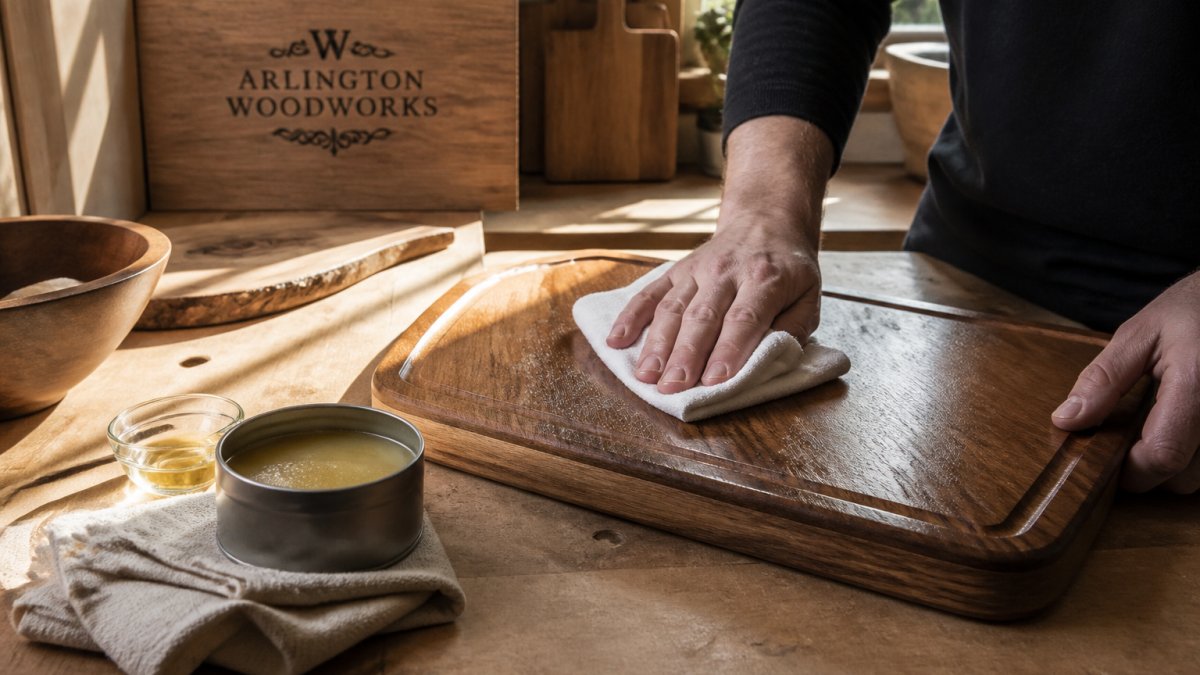
Preparation and Surface Inspection
Start with a clean, completely dry cutting board.
Inspect the board for cracks, splinters, lifting grain, or other damage. Minor roughness may be addressed with light surface preparation, but deep cracks or structural damage should be evaluated before applying any finish.
If the board already has an existing finish and you are unsure what it is, test the new product in a small hidden area first rather than assuming it will be compatible.
Application Technique and Absorption Time
Use a clean, soft cloth or an appropriate applicator.
Apply a small amount of product and spread it evenly across the surface. Start light and add more only if needed rather than applying a heavy coat all at once.
Follow the product directions for application and dwell time. Different oils and oil-and-wax blends behave differently, so avoid relying on one universal absorption time.
Buffing and Maintenance Schedule
Buff away all excess product with a clean, dry cloth until the surface feels smooth rather than greasy or tacky.
Allow the finish to cure according to the manufacturer’s directions before returning the board to regular food-contact use.
Reapply when the board begins to look dry, dull, or noticeably less conditioned. Frequency will depend on how often the board is used and washed.
Food-Safe Clear Coat for Wood: Understanding Your Options
Clear finishes let the wood grain remain visible while changing how the surface handles wear, moisture, and cleaning.
For kitchen wood, the right choice depends on the surface, how it will be used, and whether the manufacturer identifies the finish as appropriate for food-contact applications.
Shellac and Other Natural Clear Finishes
Shellac is a film-forming finish made from natural resin. It has a long history of use in woodworking and creates a clear surface coating that can be repaired or recoated when needed.
Other clear finishes include polyurethane, varnish, lacquer, and specialty products made for kitchen or food-contact use.
Do not assume that a finish is appropriate for food-contact surfaces simply because it is natural, clear, or fully cured. Check the specific product label and manufacturer guidance.
Distinguishing Film Finishes from Oil Finishes
Film-forming finishes such as shellac, polyurethane, and varnish create a coating on top of the wood.
Penetrating oils and oil-and-wax blends are designed to soak into the wood and generally leave a more natural surface feel.
For cutting boards and utensils, penetrating products are often preferred because they are easy to refresh and do not rely on a thick surface coating.
For countertops, furniture, and decorative kitchen wood, either approach may be appropriate depending on the intended use, desired appearance, and product guidance.
The important point is not whether a finish is “oil” or “clear coat,” but whether the specific product is compatible with the surface and intended use.
Common Mistakes When Finishing Kitchen Wood
Most people make one or two mistakes when oiling cutting boards or wooden kitchen surfaces.
Most problems with kitchen wood finishes come from using too much product, rushing the cure process, or applying a finish that is not well matched to the surface or intended use.
Using too much finish is one of the most common mistakes. Heavy applications can leave the surface greasy, tacky, or uneven.
Returning the surface to use too soon is another. Dry-to-the-touch and fully cured are not the same thing, so follow the product directions before putting a cutting board, butcher block, or utensil back into regular service.
Layering products without checking compatibility can also create problems. If you are switching from one finish type to another, review the manufacturer’s guidance and test in a small hidden area first.
Ignoring the product instructions is another common mistake. Different oils, wax blends, and film finishes can have very different application and cure requirements.
Using the wrong finish for the job can create unnecessary problems. A product made for furniture, exterior wood, or decorative surfaces may not be appropriate for cutting boards or other food-contact wood.
Maintaining and Reapplying Your Food-Safe Wood Finish
Wood responds to use, washing, moisture, and changes in humidity, so maintenance should be based on the condition of the surface rather than a rigid calendar.
For cutting boards and butcher blocks, reapply when the wood begins to look dry, dull, or noticeably less conditioned than after the previous treatment.
For installed countertops, frequency depends on how heavily the surface is used, how often it is cleaned, and the type of finish already in place.
Always start with a clean, completely dry surface and follow the product directions for reapplication.
Signs that it may be time for maintenance include:
- The surface looks pale or dry
- Frequently used areas lose some of their warmth or luster
- The wood feels noticeably drier than it did after the previous treatment
- Washing and regular use have visibly worn down the previous application
Routine care is usually faster and easier than waiting until the wood looks severely neglected. Apply only as much product as the surface needs and buff away the excess.
Maintenance Task |
Frequency |
Time Required |
|---|---|---|
Light conditioning (cutting board) |
When the surface begins to look or feel dry |
5-10 minutes |
Deep conditioning (countertop) |
When regular use and washing have noticeably reduced the previous finish |
15-20 minutes |
Cleaning (daily) |
After each use |
2-5 minutes |
Inspection for damage |
Periodically, especially on heavily used surfaces |
2-3 minutes |
A good kitchen wood-care routine starts with matching the finish to the surface and using it according to the manufacturer’s directions.
Whether you are caring for a cutting board, butcher block, countertop, utensil, or other kitchen wood, choose a product that is appropriate for the intended use, apply it sparingly, and allow it to cure properly before returning the surface to regular use.
FDA guidance on food-contact surfaces and USDA wood cutting board recommendations both emphasize the importance of proper maintenance.
The Starter Kit and Home Care Kit from Arlington Woodworks pair Artisan Furniture Wood Balm No. 524 with the Premium Artisan Palm Wax Brush for a simple, ready-to-use wood-care setup.

Frequently Asked Questions
What types of wood finishes are truly food-safe for kitchen surfaces?
Kitchen wood finishes generally fall into two categories: penetrating finishes such as oils and oil-and-wax blends, and film-forming finishes such as shellac, polyurethane, and varnish. The right choice depends on the surface and how it will be used. For cutting boards, butcher blocks, utensils, and other food-contact wood, use a product the manufacturer identifies as appropriate for that application and follow the directions for preparation, application, and cure time.
How long does a food-safe wood finish need to cure before it's safe to use on a cutting board?
Cure time varies by product. Dry-to-the-touch and fully cured are not the same thing, and different oils, wax blends, and film finishes can require very different timelines. Follow the manufacturer’s instructions for the specific product rather than relying on a universal number of hours or days before returning a cutting board to food-contact use.
Is Artisan Furniture Wood Balm No. 524 suitable for cutting boards and food-contact surfaces?
Yes. Artisan Furniture Wood Balm No. 524 is made with certified-organic flaxseed oil, beeswax, and orange oil and is appropriate for cutting boards, butcher blocks, wooden utensils, and other kitchen wood when used as directed. Start with a clean, completely dry surface, apply a small amount, follow the product directions, and buff away all excess before returning the surface to regular use.
What is the difference between a penetrating finish and a film-forming finish for kitchen wood?
Penetrating finishes such as oils and oil-and-wax blends are designed to soak into the wood and generally leave a more natural surface feel. Film-forming finishes such as shellac, polyurethane, and varnish create a more continuous coating on top of the wood. Neither category is automatically right for every kitchen surface. The best choice depends on the surface, how it will be used, and whether the specific product is appropriate for that application.


