

8 Pros and Cons of Butcher Block vs Granite Countertops
Last Updated: November 15, 2026
Quick Summary
The pros and cons of butcher block vs granite come down to one trade: wood gives you warmth, workability, and knife-friendly softness, while granite gives you heat and water resistance with almost no routine care. Neither wins outright, hard-cooking households that want a repairable surface lean wood, while those who want to set down a hot pan and forget about maintenance lean stone.
- Butcher block needs an oil or wax finish to resist moisture; granite is naturally resistant.
- Knife marks on wood can be sanded out, while granite chips rather than scratches.
- Granite chips and cracks generally require a stone professional, and repair may not be invisible.
- Butcher block is lighter and more forgiving on older cabinets, but still needs continuous support.
- Granite usually involves templating, fabrication, and a second site visit, adding lead time.
Table of Contents
- Butcher Block vs Granite at a Glance
- Butcher Block Countertop Maintenance: What Routine Care Really Involves
- Granite Countertop Maintenance: Sealing, Cleaning, and Repair
- Butcher Block vs Granite Price: Upfront Cost and Lifecycle Cost
- Butcher Block vs Granite vs Quartz: Where the Third Option Fits
- Performance by Kitchen Use Case: Which Surface Fits How You Cook
- Installation Logistics, Weight, and Cabinet Support
- Repair and Restoration: What Each Surface Can and Cannot Fix
- Frequently Asked Questions
Butcher Block vs Granite at a Glance
Butcher block and granite solve different kitchen priorities.
Butcher block offers warmth, workability, and a surface that can often be renewed when the finish and construction allow it. Granite offers strong heat resistance, natural variation, and relatively low day-to-day maintenance when it is properly installed and cared for.
Neither material is automatically better.
A household that values a warm wood work surface and is comfortable with regular finish care may prefer butcher block. A household that prioritizes heat resistance and lower routine maintenance may prefer granite.
Factor |
Butcher Block |
Granite |
|---|---|---|
Feel |
Warm, softer under hand |
Cool, hard surface |
Heat resistance |
Can scorch; use trivets |
Generally strong heat resistance |
Moisture resistance |
Depends heavily on finish and maintenance |
Depends on stone and sealer |
Surface damage |
Scratches and wear may sometimes be renewed |
Chips, cracks, and scratches may require specialist repair |
Routine care |
Cleaning plus finish maintenance as needed |
Regular cleaning; sealing may be needed depending on stone and sealer |
Repair approach |
Some surface wear can be renewed |
Structural or visible damage often needs a stone professional |
The right choice depends on how you cook, how much maintenance you want to do, and what kind of surface you prefer living with every day.
Butcher Block Countertop Maintenance: What Routine Care Really Involves
Butcher block maintenance depends heavily on the finish already on the surface.
Bare wood, penetrating oil finishes, oil-and-wax finishes, hardwax oils, and film finishes can all behave differently, so the existing finish matters more than the wood species when choosing a care method.
For day-to-day care:
- wipe up spills promptly,
- clean with a method appropriate for the existing finish,
- avoid prolonged standing water,
- dry the surface thoroughly,
- and pay extra attention around seams, sinks, and cutouts where moisture can collect.
The goal is to reduce unnecessary moisture exposure and keep the existing finish performing as intended.
Conditioning and Protecting an Oil-Finished Wood Surface
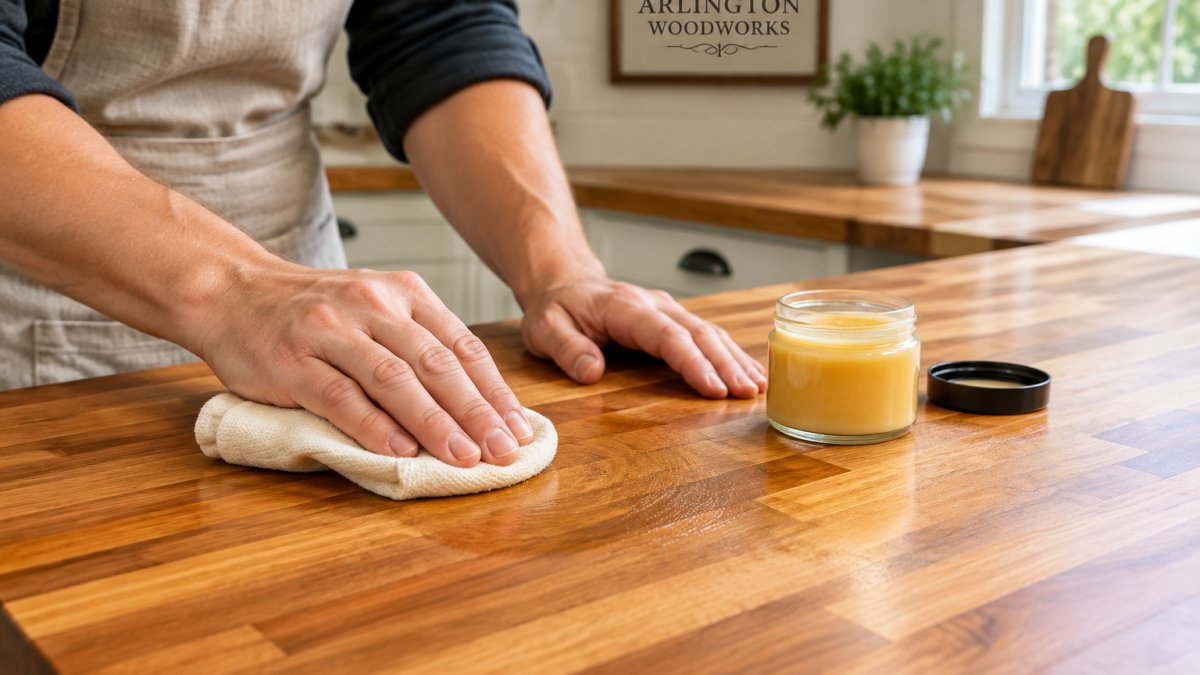
On compatible bare, oil-finished, or oil-and-wax-finished butcher block, conditioning can help restore warmth, depth, and a soft natural sheen while contributing some moisture resistance. Conditioning is not the same as cleaning or repairing.
Start with a clean, completely dry surface. Test a hidden area when compatibility is uncertain. Apply a small amount evenly, allow it to absorb for a few minutes, then buff away all excess. More product is not automatically better. Excess balm can leave the surface greasy, tacky, or uneven.
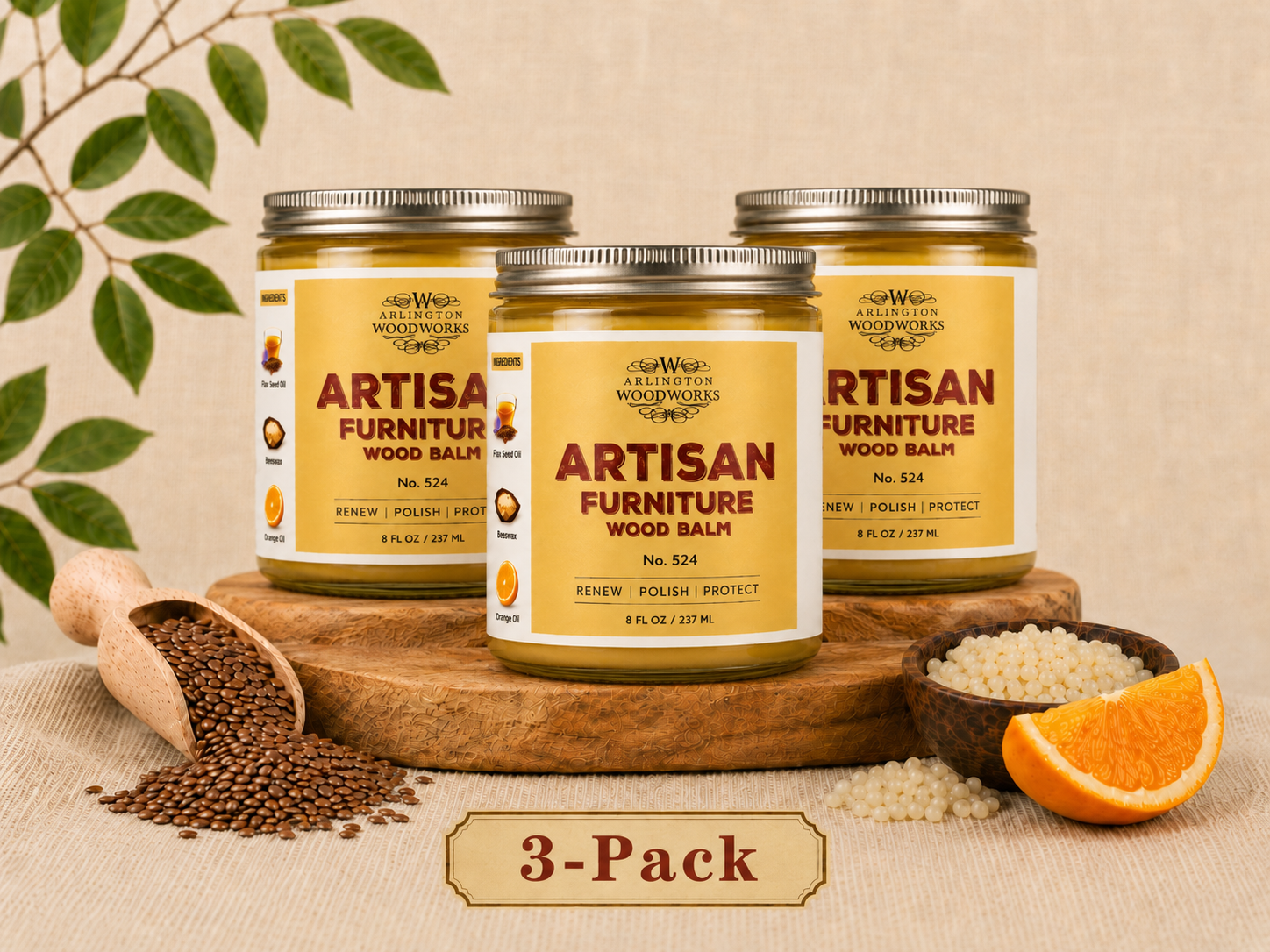
For a food-contact surface, confirm the product is intended for that use and apply it as directed. Our guide to safe kitchen wood finishes covers what to look for. When you are ready to condition, Artisan Furniture Wood Balm No. 524 is an oil-and-wax balm made with certified-organic flaxseed oil, beeswax, and orange oil, and it is not a cleaner, sanitizer, or scratch remover. For how often to oil, see our guide on how often to oil a wooden board.
If the butcher block has a film finish or another finish with specific manufacturer instructions, follow those instructions rather than assuming an oil-and-wax balm is appropriate.
Granite Countertop Maintenance: Sealing, Cleaning, and Repair
Granite is relatively low-maintenance day to day, but it is not maintenance-free.
Care depends on the specific stone, the sealer used, and the fabricator's recommendations. Some granite surfaces need periodic resealing, while others may go longer between treatments.
For routine care:
- wipe up spills promptly,
- use a cleaner appropriate for natural stone,
- avoid products the fabricator or sealer manufacturer warns against,
- and follow the recommended sealing schedule for that specific installation.
Do not assume every granite countertop needs the same cleaner or the same resealing interval.
Repair is another important difference from butcher block. Chips, cracks, damaged seams, or visible edge damage may require a stone fabricator or repair specialist, especially when the goal is to preserve the appearance of the surrounding pattern.
Granite can be very durable, but when meaningful damage does occur, repair is usually a different process from routine surface care.
Butcher Block vs Granite Price: Upfront Cost and Lifecycle Cost
The cost difference between butcher block and granite depends on more than the price of the countertop material itself.
Installation, fabrication, finishing, maintenance, and repair can all affect the total cost over time.
What Drives Upfront Cost
For granite, major cost factors can include:
- stone grade and availability,
- slab thickness,
- number and complexity of cutouts,
- edge profile,
- seam layout,
- templating,
- fabrication,
- delivery,
- and installation.
For butcher block, cost can vary based on:
- wood species,
- thickness,
- overall dimensions,
- construction style,
- whether the top arrives finished or unfinished,
- delivery,
- fitting,
- and installation.
An unfinished butcher-block top may have a lower initial material cost, but finishing labor and supplies still need to be included in the comparison.
What Drives Long-Term Cost
Long-term cost depends on how each surface is used and maintained.
For butcher block, ongoing costs may include:
- appropriate cleaning supplies,
- conditioning or finish-maintenance products,
- occasional surface renewal where the construction and finish allow it,
- and professional repair or refinishing when damage exceeds routine maintenance.
For granite, ongoing costs may include:
- appropriate stone-cleaning products,
- resealing when recommended for the specific stone and sealer,
- and specialist repair for chips, cracks, seams, or other damage.
Neither surface has one universal lifecycle cost.
A Practical Way to Compare Quotes
When comparing butcher block and granite, ask each supplier or installer for the complete installed cost and expected maintenance requirements.
Confirm:
- whether fabrication, cutouts, edge work, delivery, and installation are included,
- whether the butcher block arrives finished or unfinished,
- what maintenance the manufacturer or fabricator recommends,
- whether resealing or refinishing is expected,
- and what common repair work typically involves.
Comparing the full installed system gives you a more useful picture than comparing countertop material prices alone.
Butcher Block vs Granite vs Quartz: Where the Third Option Fits
Quartz is another common countertop option and sits between butcher block and granite in several ways.
Quartz countertops are engineered surfaces made from mineral aggregate and resin. They are generally low-maintenance and designed to resist staining without the periodic sealing commonly associated with many natural-stone installations.
Each material has different strengths:
- Butcher block offers warmth, workability, and a surface that may be renewed when the construction and finish allow it.
- Granite offers natural variation, strong heat resistance, and relatively low routine maintenance.
- Quartz offers a more uniform appearance, low routine maintenance, and good resistance to everyday staining.
The trade-offs matter too.
Wood can scratch, stain, scorch, or move with changes in moisture. Granite can chip or crack and may require sealing depending on the stone and installation. Quartz is less tolerant of high heat than many natural stones and can be difficult to repair invisibly if damaged.
There is no universally best countertop material. The right choice depends on how you use the kitchen, the appearance you prefer, your tolerance for maintenance, and the installation requirements of the space.
Performance by Kitchen Use Case: Which Surface Fits How You Cook
The best countertop material depends on how the kitchen is actually used.
Different surfaces solve different problems:
- Frequent high-heat cooking: granite may be a better fit when heat resistance is a major priority, although trivets and manufacturer guidance are still good practice.
- General prep and everyday use: butcher block offers a warmer, softer work surface and can often be renewed when the finish and construction allow it.
- Pastry and dough work: some cooks prefer cooler stone surfaces for temperature-sensitive dough, while others prefer the feel of wood for general prep.
- Low-maintenance households: granite or quartz may be a better fit when minimizing routine finish care is important.
- DIY-friendly projects: butcher block may be easier for an experienced homeowner to cut, fit, and finish than natural stone.
- Design-driven kitchens: butcher block, granite, and quartz each create a different look, so appearance may matter as much as maintenance or performance.
No single material is best for every cooking style.
The useful question is which trade-offs fit your habits: heat exposure, moisture, maintenance, repairability, feel, appearance, and how much hands-on care you want to provide.
Installation Logistics, Weight, and Cabinet Support
Installation requirements can differ substantially between butcher block and granite.
The main considerations are weight, cabinet condition, support, seams, cutouts, lead time, and whether the installation is appropriate for DIY work.
Weight and Cabinet Support
Granite is significantly heavier than wood, and the final load depends on slab thickness, dimensions, and layout.
Cabinets should be level, structurally sound, and capable of supporting the countertop system specified by the fabricator. Additional reinforcement may be required depending on the installation, especially around large spans, overhangs, sinks, cooktops, or other cutouts.
Butcher block is generally lighter, but it still requires a flat, properly supported cabinet run. Wood can move with changes in humidity, so installation should also account for the fastening and expansion guidance provided by the countertop manufacturer.
Do not assume that cabinet age alone determines which material is appropriate. Condition, construction, span, support, and the countertop manufacturer's or fabricator's requirements matter more.
Seams and Cutouts
Both materials require careful planning around seams and openings.
Granite seam placement, edge distance, and support around sink and cooktop cutouts should be determined by the fabricator.
On butcher block, seams and cutouts deserve extra attention because exposed or poorly protected wood around those areas can be more vulnerable to moisture.
Follow the countertop manufacturer's installation and finishing instructions rather than relying on one universal seam or clearance rule.
Lead Times and Templating
Granite installations commonly involve field measurements or templating, fabrication, delivery, and installation by a stone fabricator.
Butcher block may be available in standard or custom dimensions and can sometimes be cut and fitted on site, depending on the product and project.
Lead times vary considerably by supplier, material availability, fabrication requirements, and project complexity, so compare actual schedules rather than assuming one material will always be faster.
DIY Feasibility
Butcher block can be more approachable for an experienced DIYer because standard woodworking tools may be suitable for cutting, fitting, and finishing some products.
Granite typically requires specialized fabrication, handling, seam work, and installation equipment.
DIY suitability still depends on the specific countertop, layout, cutouts, installation instructions, and the skill level of the installer.
When in doubt, follow the manufacturer's installation requirements or use a qualified installer—especially where structural support, large spans, complex seams, sinks, cooktops, or heavy stone are involved.
Repair and Restoration: What Each Surface Can and Cannot Fix
Butcher block and granite fail in different ways, so repair approaches are different too.
On butcher block, light surface wear, minor scratches, or finish deterioration may sometimes be renewed when the countertop construction and existing finish allow it.
Conditioning can improve surface appearance and feel on compatible wood, but it does not repair cracks, failed glue joints, lifting seams, water damage, deep gouges, failed finishes, or structural problems.
Granite chips, cracks, damaged seams, or edge damage generally require a stone repair professional or fabricator. Repairs may improve function and appearance, but they are not always invisible.
The important distinction is between routine maintenance and actual repair.
Use cleaning and conditioning for maintenance. Use refinishing, repair, or professional restoration when the material itself or the existing finish has failed.
For any countertop with significant cracking, movement, water damage, loose seams, or structural concerns, address the underlying problem before returning to routine surface care.
Choosing between butcher block and granite comes down to how you use the kitchen, how much maintenance you want to take on, and what kind of surface you prefer living with every day. Butcher block offers warmth, repairability in some situations, and a hands-on wood surface. Granite offers strong heat resistance, natural variation, and relatively low routine maintenance. Neither is universally better. The better choice is the one that fits your habits, installation, budget, and willingness to maintain the surface properly.
Frequently Asked Questions
Is butcher block better than granite?
Neither material is better in every kitchen. Butcher block offers a warm, softer work surface and may allow some surface wear to be renewed when the construction and finish permit it. Granite offers strong heat resistance, lower routine finish maintenance, and the look of natural stone. If you prefer a wood surface and are comfortable maintaining its finish, butcher block may be the better fit. If you prioritize heat resistance and lower routine maintenance, granite may make more sense.
What are the disadvantages of butcher block countertops?
Butcher block can scratch, stain, scorch, and move with changes in moisture and humidity. It also requires more attention around spills, seams, sinks, and other areas where water can collect. Depending on the existing finish, the surface may need periodic conditioning or other finish maintenance. Use products that are compatible with the existing finish, and follow the countertop manufacturer's guidance when available.
How do butcher block and granite compare in cost?
There is no universal price difference. Material grade, dimensions, fabrication, installation, finishing, cutouts, maintenance, and repair can all affect the final cost. Compare complete installed quotes and expected maintenance requirements rather than relying only on the price of the countertop material.
Which countertop is easier to maintain, butcher block or granite?
Granite generally requires less hands-on finish maintenance, although cleaning and resealing requirements depend on the specific stone and sealer. Butcher block needs more attention to moisture exposure and the condition of its finish. Clean spills promptly, avoid prolonged standing water, and maintain the surface according to the finish already on the wood. For compatible food-contact butcher block, Artisan Furniture Wood Balm No. 524 can be used as directed to condition the surface and help restore warmth, depth, and a soft natural sheen. It is not a cleaner, sanitizer, repair product, or structural fix.


