

Non Toxic Wood Furniture Restorer: 7 Top Picks for 2026
Table of Contents
- What a Non Toxic Wood Furniture Restorer Actually Does
- Quick Comparison: 7 Non Toxic Wood Restorers
- 1. Artisan Furniture Wood Balm No. 524: Best Food-Contact Balm
- 2. Odie's Oil Universal: Best for Hardwax Sheen on Furniture
- 3. Walrus Oil Furniture Butter: Best for Cutting Boards and Butcher Block
- 4. Howard Feed-N-Wax: Best Beeswax and Orange Oil Polish
- 5. Daddy Van's All Natural Beeswax Furniture Polish: Best Scented Option
- 6. Real Milk Paint Half & Half: Best for Raw and Tired Wood
- 7. Clapham's Beeswax Salad Bowl Finish: Best for Bowls and Food-Contact Wood
- Frequently Asked Questions
Last Updated: October 20, 2026
What a Non Toxic Wood Furniture Restorer Actually Does
A non toxic wood furniture restorer is a conditioning product that adds oil and wax back into dry, dull wood to help restore warmth, depth, and luster without harsh solvents. Arlington Woodworks builds its balm around that narrow, honest job. It conditions and protects.
That distinction matters more than most buying guides admit. Wood dries out from indoor heat, sunlight, and repeated washing. A conditioner replaces some of what time took away. A restorer in the marketing sense often means a full refinish, which is a different project with different risks.
Cleaning, Polishing, Conditioning, and Restoration: Know the Difference
These four words get used interchangeably, and that is where most buying mistakes start.
- Cleaning removes grime, dust, and residue from the surface.
- Polishing adds shine, often temporarily, and can include fillers or silicones.
- Conditioning penetrates bare or oil-finished wood with oil and wax to improve appearance and slow future drying.
- Restoration means repairing damage: scratches, water rings, cracks, or a broken film finish. That is refinishing work, not a wipe-on product.
Most people shopping for a "restorer" actually need a conditioner. If your table looks tired and pale but the surface is intact, conditioning is the right first step.
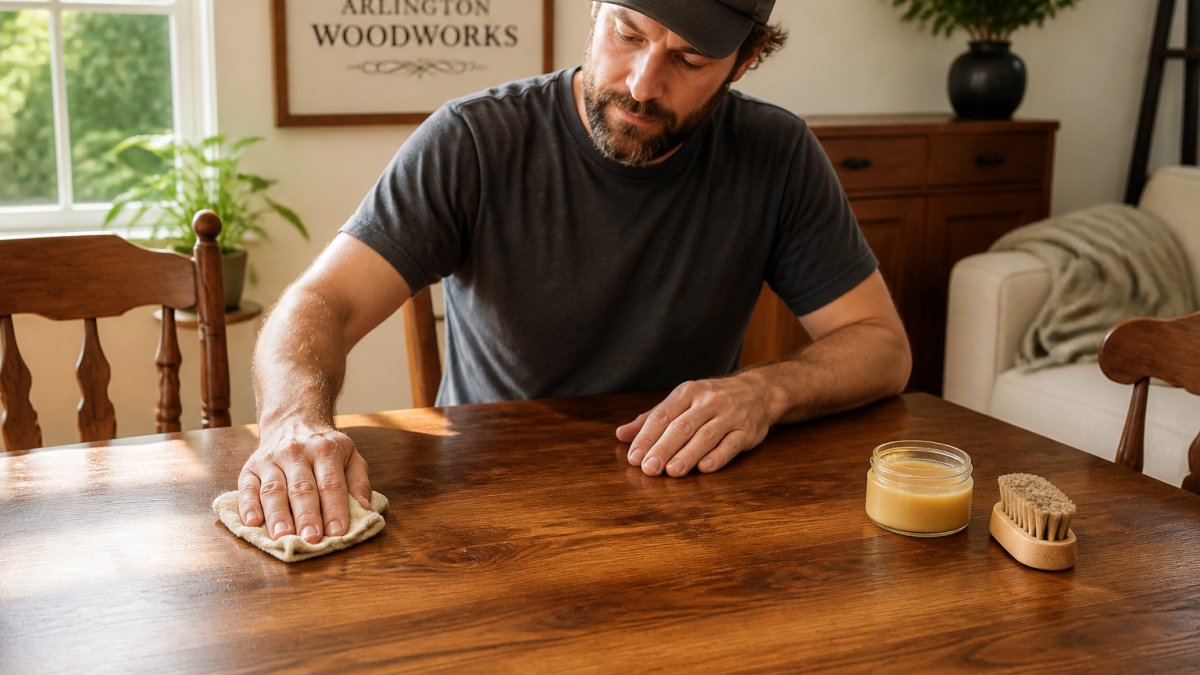
For food-contact pieces, food safety depends on the specific product, its formulation, and using it as directed. The USDA Food Safety and Inspection Service guidance on food-contact surfaces is a sensible reference point, and so are university extension programs that cover cutting board care.
Quick Comparison: 7 Non Toxic Wood Restorers
Here is how the seven picks line up on the factors that actually decide a purchase: formulation, intended use, compatible surfaces, food-contact suitability, application method, finish character, maintenance, and value. None of these products repairs scratches, water rings, stains, cracks, or a failing finish; they condition wood and help restore warmth, depth, and luster.
| Product | Best For | Key Ingredients | Food-Contact | Finish |
|---|---|---|---|---|
| No. 524 | Furniture + kitchen wood | Flaxseed oil, beeswax, orange oil | Yes, when used as directed | Soft natural sheen |
| Odie's Oil Universal | Furniture / hardwax look | Oil + wax blend | Check manufacturer | Satin hardwax |
| Walrus Oil Furniture Butter | Cutting boards + butcher block | Oil + wax blend | Maker-positioned for kitchen wood | Matte–satin |
| Howard Feed-N-Wax | Quick furniture refresh | Beeswax + orange oil | No | Low-gloss polish |
| Daddy Van's | Furniture polish | Beeswax blend | No | Soft wax shine |
| Real Milk Paint Half & Half | Raw / tired wood | Oil + wax blend | Check manufacturer | Subtle penetrating finish |
| Clapham's Salad Bowl Finish | Bowls + utensils | Beeswax + food-grade oil | Yes, per maker | Soft satin |
The honest takeaway: none of these repair damage. They differ in how much wax they leave behind, how they smell, whether the maker positions them for food contact, and how much surface prep the application demands. Match formulation and finish compatibility to your surface first, then compare sheen and value.

1. Artisan Furniture Wood Balm No. 524: Best Food-Contact Balm
Arlington Woodworks' pick leads this list because it does one job cleanly. No. 524 is made with certified organic flaxseed oil, beeswax, and orange oil, and nothing synthetic.
It is a conditioner and protective finish, not a cleaner or a repair product.
Application is simple: start with a clean, completely dry surface, apply a small amount, let it absorb for a few minutes, then buff away all excess. Test a hidden area first.
Where it falls short: it will not fill a scratch or lift a stain, and on a film-sealed factory finish it may sit on top rather than absorb. For those surfaces, check with the manufacturer first.
2. Odie's Oil Universal: Best for Hardwax Sheen on Furniture
Odie's Oil Universal is a well-known oil and wax blend built for a satin hardwax look on furniture. If you want a slightly more substantial sheen than a soft balm gives, this is the category to look at.
It suits bare and oil-finished furniture better than film-sealed surfaces. The trade-off is that hardwax blends reward careful, thin application; heavy coats can feel tacky until they cure. Follow the maker's directions on dry time rather than guessing.
3. Walrus Oil Furniture Butter: Best for Cutting Boards and Butcher Block
Walrus Oil Furniture Butter is positioned squarely at cutting boards and butcher block, which makes it a natural comparison for anyone maintaining kitchen wood. It is an oil and wax blend with a buttery texture and a matte-to-satin result.
For removable cutting boards, it is a reasonable choice. For an installed butcher-block countertop, treat it as a different surface and follow the countertop manufacturer's care instructions, since those tops often carry specific guidance.
4. Howard Feed-N-Wax: Best Beeswax and Orange Oil Polish
Howard Feed-N-Wax is the familiar beeswax and orange oil polish many people already have under the sink. It is a polish first, so think of it as a quick refresh rather than a deep conditioning treatment.
It is widely available and easy to apply, which is genuinely useful for a fast touch-up before guests arrive. What it is not is a restoration product, and it should not be expected to correct damage.
5. Daddy Van's All Natural Beeswax Furniture Polish: Best Scented Option
Daddy Van's All Natural Beeswax Furniture Polish is a beeswax-based polish with a scented character, and for some buyers that scent is the deciding factor. It gives a soft wax shine on furniture and is straightforward to apply.
If fragrance matters to you, this is the pick to weigh against an unscented balm. If you are conditioning food-contact wood, choose a product the maker explicitly positions for that use.
6. Real Milk Paint Half & Half: Best for Raw and Tired Wood
Real Milk Paint Half & Half is an oil and wax blend aimed at raw and tired wood, and the name reflects its half-oil, half-wax approach. It is a good fit for bare wood that has gone pale and dry.
On raw wood it penetrates and helps restore depth. On an unknown or sealed finish, test a hidden spot first and expect it to behave differently.
7. Clapham's Beeswax Salad Bowl Finish: Best for Bowls and Food-Contact Wood
Clapham's Beeswax Salad Bowl Finish is designed for wooden bowls, utensils, and other food-contact wood. Its beeswax-and-oil formulation makes it a practical choice for people who want a simple finish specifically intended for kitchen and serving pieces.
It leaves a soft satin finish and is intended to be applied in a thin coat, allowed to absorb, and buffed thoroughly. For furniture or larger household pieces, one of the other products on this list may be a better fit, but for bowls, utensils, and smaller food-contact items, Clapham's is worth considering.
Frequently Asked Questions
How to restore wood furniture naturally?
Start with the least invasive step: clean the surface with a mild wood-safe cleaner and let it dry completely. If the wood looks dry or dull, apply a thin coat of a plant-based conditioner or beeswax balm, let it absorb for a few minutes, then buff away all excess. For deeper grime or failing finish, spot-test a hidden area first and consider professional advice before sanding or stripping. Natural restoration works best on bare or oil-finished wood; film-sealed surfaces usually just need cleaning and a light polish.
Is there a non-toxic polish for furniture?
Yes. Look for products with disclosed ingredients such as beeswax, plant oils, and citrus or essential oils, and avoid formulas that list petroleum distillates or synthetic solvents. Non-toxic furniture polish should be used as directed and tested on a hidden area first. Products made with food-safe ingredients, like Artisan Furniture Wood Balm No. 524, are appropriate for food-contact surfaces such as cutting boards and butcher blocks when used as directed. Always follow the manufacturer's instructions for your specific finish.
Can wood conditioner repair scratches, water rings, or stains?
No. A wood furniture conditioner or balm helps restore warmth, depth, and luster to dry or dull wood, but it does not repair scratches, water rings, stains, cracks, or failing finishes. Those are damage issues that need a different approach, often involving refinishing or professional repair. If your piece has structural damage or a compromised finish, consult a furniture restorer before applying any product. Conditioners are maintenance products, not repair products.
Which wood care products are suitable for cutting boards?
Cutting board wood conditioner should be food-safe when used as directed and free of synthetic waxes or harsh solvents. Look for formulas made with ingredients like beeswax, flaxseed oil, or mineral oil that are intended for food-contact surfaces. Apply a small amount to a clean, completely dry board, let it absorb, and buff off excess. Never use a product labeled only as furniture polish on a cutting board unless its directions specifically allow food-contact use.
How often should you condition wood furniture?
Condition based on use and appearance, not a rigid calendar. A dining table used daily may need conditioning every few months, while a decorative cabinet might need it once or twice a year. Signs it's time include dryness, dullness, and a surface that looks lighter or tired. Always start with a clean, dry surface, test a hidden area first, and follow the product's directions. Over-application can leave residue, so less is usually more.
Dry, tired wood is a maintenance problem, not a damage problem, and the fix is a product that conditions honestly. If you want one balm for furniture, cabinets, heirlooms, and kitchen wood, our Artisan Furniture Wood Balm No. 524 is made with certified organic flaxseed oil, beeswax, and orange oil, packaged in recyclable glass, and simple to apply with a soft cloth or our palm wax brush. Shop all products at Arlington Woodworks and give your wood the care it actually needs.


