

Restore Dull Wood Furniture: Clean, Condition, Protect
Last Updated: November 14, 2026
Quick Summary
To restore dull wood, clean first with a soft cloth and mild soap, dry fully, then reassess before adding anything. If the wood is compatible bare or oil-finished and still flat, a conditioning balm can help restore warmth, depth, and a soft natural sheen.
- Dullness usually comes from surface grime, worn finish, finish degradation, or dry bare wood.
- Wipe a small area with a damp cloth: gray or tacky residue means cleaning is the fix.
- Test any product in a hidden area before applying it to the whole piece.
- Apply balm sparingly, let it absorb a few minutes, then buff away all excess.
- Conditioning will not fix peeling finish, deep scratches, cracks, or veneer damage.
Table of Contents
- Why Wood Furniture Looks Dull: Diagnosing the Surface Before You Treat It
- How to Clean Wood Furniture Without Damaging the Finish
- How to Restore Wood Furniture Without Sanding
- The Best Oil for Wood Furniture Depends on the Finish
- How to Restore Antique Wood Furniture Without Harming It
- Cleaning, Conditioning, and Refinishing: What Each Job Actually Does
- Choosing the Right Balm and Brush for Your Piece
- Frequently Asked Questions
Why Wood Furniture Looks Dull: Diagnosing the Surface Before You Treat It
Most dull wood furniture doesn't need restoring. It needs diagnosing. Dullness on a tabletop usually comes from one of a few sources, and each one calls for a different response. Some need cleaning. Some need conditioning. A few need a professional.
Here's the core idea: to restore dull wood is a process of removal and replacement, not a single product. You remove what shouldn't be there, then decide whether anything needs to go back on.
Dullness has four common causes:
- Surface grime and residue: dust, cooking film, and old polish buildup that scatters light.
- Worn finish: a topcoat thinned by years of wiping and washing.
- Finish degradation: cracking, cloudiness, or peeling that no balm will reverse.
- Dry, compatible bare or oil-finished wood: wood that looks flat because its surface has dried out.
The U.S. National Park Service guidance on caring for wooden objects makes a point worth repeating: understand the material and its finish before you touch it. That order matters more than any product choice.
Grime and Residue Versus Finish Wear
Grime sits on top. Finish wear goes deeper.
Wipe a small area with a soft, slightly damp cloth. If the cloth comes away gray or tacky, you're looking at residue. That's good news. Residue is the easiest problem to fix and often the whole problem.
Finish wear looks different. The sheen is uneven. Edges and armrests feel rougher than the center. Color may be lighter where hands rest most. That's a coating that has thinned, and conditioning won't rebuild it.
When Dullness Means Conditioning, Not Refinishing
If cleaning leaves the surface clean but still flat, and the wood is bare or oil-finished, conditioning may help. A conditioning balm can restore warmth, depth, and a soft natural sheen to compatible wood.
But if you see peeling, cracking, or color worn through to raw wood, stop. Those are finish failures, and they call for refinishing or professional repair, not a balm.
How to Clean Wood Furniture Without Damaging the Finish
Clean first, always. Cleaning is the least-invasive step, and it tells you whether you have a real problem or just a dirty surface. It also removes the grit that can dull a finish over time.
Match the method to the finish, not to the stain. The existing finish matters more than the wood species.
Work from gentlest to strongest:
- Dust first. Use a soft, dry cloth or a microfiber cloth. Dust is abrasive; wiping a dusty surface with a damp cloth can drag grit across the finish.
- Wipe with a cloth wrung out in mild soap and water. Use a mild dish soap at a low dilution, wring the cloth until it is barely damp, and keep water away from seams, edges, and veneer joints where moisture can wick in.
- Dry completely with a clean cloth. Do not let water sit on the surface.
- Let it sit before you assess it. A damp surface looks dull for reasons that have nothing to do with the wood.
For sticky buildup, do not reach for solvents or alcohol. Our guide on how to safely clean sticky residue off vintage wood walks through a finish-appropriate method before you condition anything.
Watch out: vinegar and lemon mixtures, olive oil and cooking oils, silicone polishes, alcohol, and harsh solvents are not first-line cleaners. Some leave a residue that attracts more dust; others can soften, cloud, or strip a finish. Skip them unless a manufacturer specifically directs otherwise.
The Hidden-Area Test Before Any Product
Never apply a product to a whole piece first. Test it.
Pick a hidden spot: the underside of a tabletop, the inside of a leg, the back of a drawer front. Clean it, dry it, apply a small amount of your chosen product, and wait. Check for darkening, cloudiness, tackiness, or any change you do not want.
A hidden-area test checks compatibility. It does not identify an unknown finish with certainty. Do not try to identify a finish from gloss, hardness, absorbency, appearance, water behavior, or touch alone, and do not use water-drop, alcohol, solvent, heat, or fingernail tests on an unknown finish. If you do not know what is on the piece, and it is an antique, veneered, or valuable, get professional guidance before you do anything irreversible.
How to Restore Wood Furniture Without Sanding
You can often restore dull wood furniture without sanding, but only when the finish is intact and the problem is surface-level. Sanding removes material. Once it's gone, it's gone.
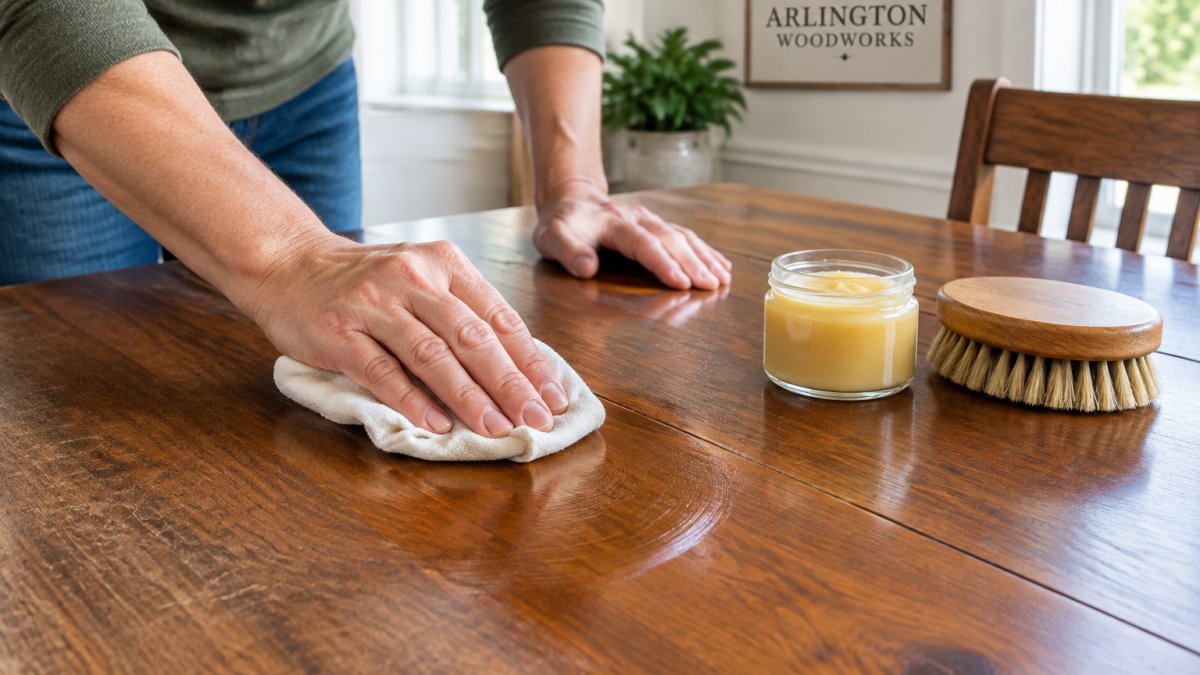
Work in this order:
- Clean and let the surface dry fully.
- Reassess. Is it still dull, or was it just dirty?
- Test any product in a hidden area.
- Condition only if the wood is compatible and still looks dry or flat.
- Buff away all excess.
If cleaning and conditioning don't fix it, sanding probably won't either. At that point you're looking at refinishing, which is a different job with different risks.
The Best Oil for Wood Furniture Depends on the Finish
There is no single best oil. The right choice depends on what is already on the wood, and the finish matters more than the species. Bare or oil-finished wood behaves differently from polyurethane, varnish, lacquer, shellac, wax, and hardwax oil. A product that works well on one can sit on top of another and turn tacky.
Not all oils are the same, and they should not be treated as interchangeable:
- Non-drying oils such as mineral oil stay liquid and do not harden. They can help condition bare wood and are common on cutting boards, but they can leave a film on sealed furniture and need reapplication.
- Drying oils such as linseed and tung oil cure over time. They can build sheen on bare wood, but they are a finishing step with their own learning curve, and excess or poorly wiped oil can dry unevenly.
- Oil-and-wax blends combine oil for conditioning with wax for a soft sheen and some moisture resistance. They sit between a pure oil and a film finish and are often the simplest choice for compatible bare or oil-finished furniture.
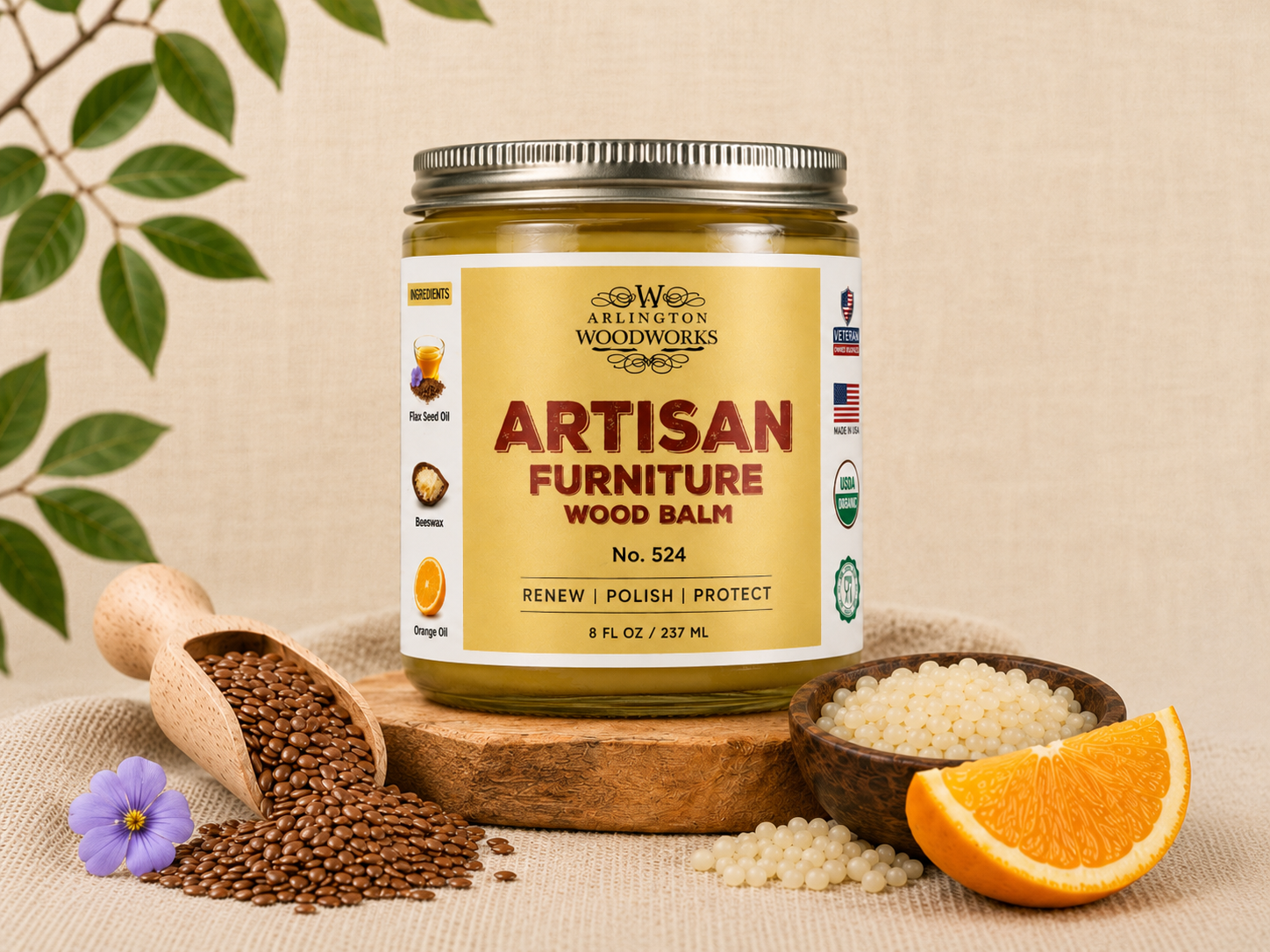
For compatible bare or oil-finished wood that stays dull after cleaning, an oil-and-wax conditioning balm is a reasonable next step. Artisan Furniture Wood Balm No. 524 is exactly that: a conditioner and protective finishing balm made with certified organic flaxseed oil, beeswax, and orange oil.
If the finish is a film coating such as polyurethane, varnish, lacquer, or shellac, a conditioning balm may not be the right product at all. In that case, cleaning and, if needed, professional repair or refinishing are the better path.
Applying a Conditioning Balm Step by Step
Start with a clean, completely dry surface. Test a hidden area first. Then:
- Scoop a small amount of balm.
- Apply it evenly in circular motions.
- Let it absorb for a few minutes.
- Buff away all excess with a clean cloth.
More product is not better. Excess balm leaves a surface greasy or tacky. Aim for an even, smooth finish with nothing sitting on top. Follow the product's own directions for any specific dwell or recoat guidance.
You can find the full product details and formulation on the Artisan Furniture Wood Balm No. 524 page.
How to Restore Antique Wood Furniture Without Harming It
Antiques get the most cautious approach, full stop. Preserve first. Irreversible work only when it's truly needed, and ideally with a professional's eyes on the piece.
Veneer is the big risk. A veneered surface is a thin layer of wood over a substrate, and aggressive work can lift or crack it. Antique finishes also carry value. Stripping one can cut what a piece is worth.
For antique pieces, our guidance on how to revive antique walnut furniture covers piece-specific, preserve-first steps. If your piece has veneer, read whether you can apply wood balm to antique veneer before you apply anything.
Conditioning will not fix peeling finish, worn-through coatings, deep scratches, stains, cracks, veneer damage, or structural issues. Those need repair or refinishing, and often a professional.
Cleaning, Conditioning, and Refinishing: What Each Job Actually Does
These are three different jobs, and mixing them up is where most damage happens.
Job |
What It Does |
Removes Material? |
Fixes Dullness From |
|---|---|---|---|
Cleaning |
Lifts dust, grime, and residue |
No |
Surface buildup |
Conditioning |
Adds oil and wax to compatible wood |
No |
Dry, flat bare or oil-finished wood |
Refinishing |
Removes the old coating and applies a new one |
Yes |
Worn, cracked, or peeling finish |
Cleaning removes what shouldn't be there. Conditioning adds something back to compatible wood. Refinishing takes the old finish off and starts over.
Protecting is a fourth job, and it's ongoing. A wax finish on a conditioned surface contributes moisture resistance and everyday wear protection.
Choosing the Right Balm and Brush for Your Piece
A balm and a brush are two different decisions, and both come down to fit.
For the balm, check three things before you buy:
- Is it intended for your type of wood and finish?
- What's in it, and what does each ingredient do?
- Is it a cleaner, a conditioner, a protective finish, or a repair product?
For application, a cloth works fine on flat surfaces. A brush gives more control on legs, trim, and detail areas. The Premium Artisan Palm Wax Brush is built for even, controlled balm coverage, with a dense natural bristle and an ergonomic palm handle.
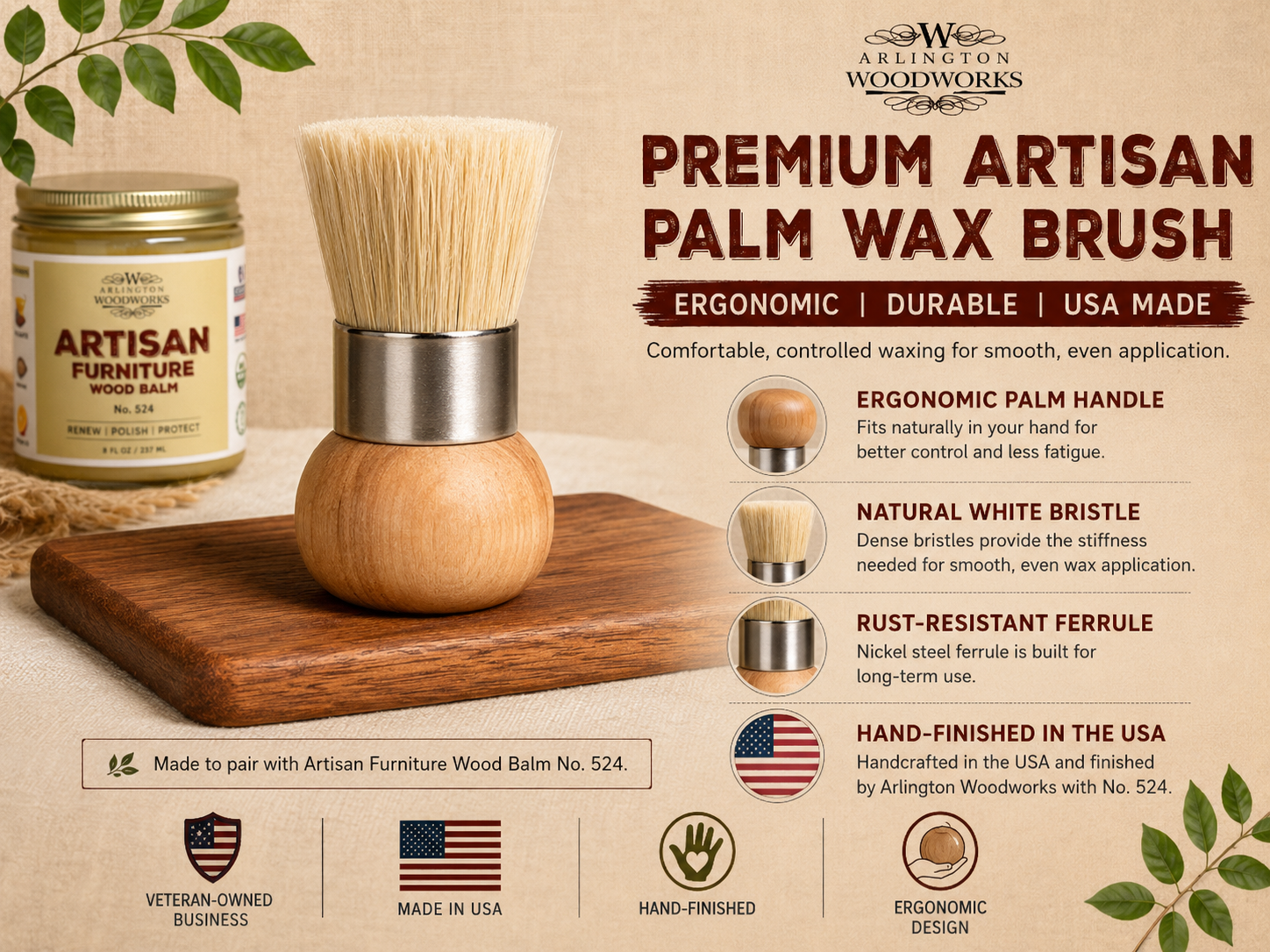
If you want both, the Starter Kit pairs the balm with the brush.
Best for: compatible bare or oil-finished furniture that stays dull after cleaning. Skip if: the finish is peeling, cracked, or worn through. That's a refinishing job.
Dull wood furniture is usually a diagnosis problem, not a product problem. Clean it, dry it, look again, and only then decide whether it needs conditioning.
Frequently Asked Questions
How do you restore dull wood furniture naturally?
Start by removing dust with a soft cloth, then clean only as appropriate for the existing finish and let the surface dry completely. Reassess: if the wood is bare or oil-finished and still looks dry or faded, a conditioning balm can help restore warmth and depth. If the finish is peeling, worn through, or damaged, conditioning will not fix it and the piece needs repair or refinishing instead.
What oil is best for wood furniture?
There is no single best oil, because the existing finish matters more than the wood species. Drying oils, non-drying oils, waxes, and oil-wax blends behave differently and are not interchangeable. On bare or oil-finished wood, a small amount of a conditioning oil-wax balm can improve surface feel and luster. On film finishes such as polyurethane or lacquer, test any product in a hidden area first. Avoid cooking oils and olive oil, which can turn rancid.
Can you use wood balm on finished furniture?
It depends on the finish. A conditioning balm is formulated for compatible bare or oil-finished wood, and film finishes may behave differently. Test the actual product on a hidden area first, then apply a small amount evenly, let it absorb for a few minutes, and buff away all excess. A hidden-area test checks compatibility but does not identify an unknown finish with certainty.
Does conditioning wood furniture repair scratches or water rings?
No. Conditioning improves surface feel and helps restore warmth, depth, and a soft sheen on compatible wood, but it is not a repair product. It will not fix scratches, water rings, stains, cracks, peeling finish, veneer damage, or structural issues. Those need professional assessment or refinishing, and valuable or antique pieces should get preserve-first guidance before any irreversible work.


