

Natural Organic Wood Polish Ingredients: A Guide
Table of Contents
- Common Ingredients in Natural Wood Polish and Wood Balm
- How to Apply Wood Balm for Best Results
- Choosing the Best Natural Wood Conditioner for Your Surfaces
- Frequently Asked Questions
Last Updated: September 28, 2026
Common Ingredients in Natural Wood Polish and Wood Balm
Natural wood-care balms often combine an oil, a wax, and sometimes a solvent or aromatic oil. The oil can penetrate or condition compatible wood surfaces, while the wax helps create a smooth, protective surface layer and the solvent can improve spreadability. Flaxseed oil, beeswax, and orange oil are the classic combination, and the blend in Artisan Furniture Wood Balm No. 524.

Artisan Furniture Wood Balm No. 524
A polish is not a cleaner: clean first, let the wood dry completely, then condition.
Ingredient Role |
What It Does |
Common Choices |
Watch Out For |
|---|---|---|---|
Drying oil |
Penetrates or conditions compatible wood surfaces |
Flaxseed, tung, walnut |
Non-drying oils that stay greasy |
Wax |
Forms the protective layer |
Beeswax, carnauba |
Paraffin or synthetic waxes |
Solvent |
Thins the blend for absorption |
Orange oil, d-limonene |
Harsh petroleum distillates |
Flaxseed oil polymerizes, hardening inside the grain.
Beeswax produces a softer finish, while carnauba wax is harder and can create more sheen. For food-contact surfaces, choose a finished product specifically formulated and labeled for that intended use.
Orange oil, or its isolated form d-limonene, thins the balm so it spreads without heating. It is a solvent, not a disinfectant.
Wood Compatibility Matrix
Surface Type |
Suitable for Oil-and-Wax Balm |
Notes |
|---|---|---|
Bare or oil-finished wood |
Yes |
Absorbs readily; test a hidden area first |
Removable cutting boards |
Yes |
Condition after cleaning and full drying |
Installed butcher-block countertops |
Yes, if oil-finished |
Check the installer's guidance first |
Film-sealed or lacquered wood |
No |
Wax sits on top and smears; follow the maker's care guide |
Unknown or antique finish |
Test first |
Try a hidden spot before any full application |
If you do not know what was put on a piece, test underneath or on the back edge first. An oil-and-wax balm is generally intended for surfaces that can accept the product; on heavily film-sealed surfaces, absorption may be limited.
How to Apply Wood Balm for Best Results
Applying wood balm is straightforward: clean and dry the surface, apply a small amount, allow it to sit according to the product instructions, then buff away the excess.
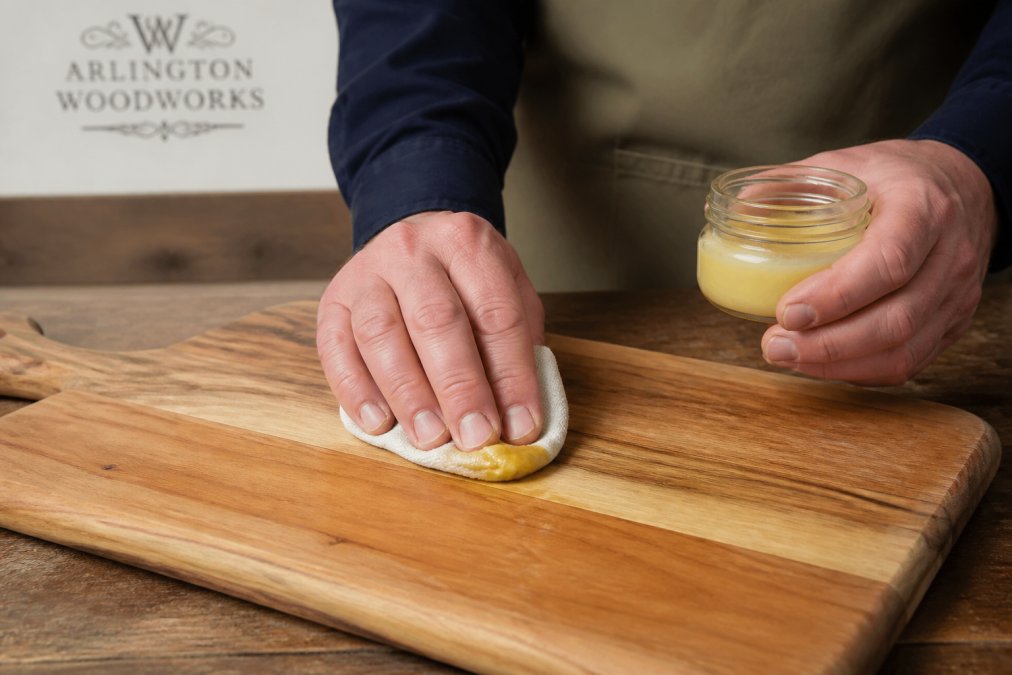
Step-by-step guide showing hands applying balm to a wooden cutting board with a soft cloth
- Wipe away dust and crumbs with a soft cloth.
- Clean food-contact wood per the manufacturer's instructions, then let it dry completely.
- Test a hidden area, such as the underside or back edge.
- Work in a small amount with circular motions, following the grain.
- Let it sit according to the product directions.
- Buff with a clean, dry cloth until dry to the touch, not tacky.
A greasy board is an over-oiled one; excess balm that never absorbs attracts dust, so buff until your cloth comes away clean.
Shelf Life and Spoilage
Natural drying-oil and wax blends can remain usable for an extended period when stored properly. If your polish forms a film in the jar, you can typically remove this and use the freshly exposed polish/balm underneath it.
Choosing the Best Natural Wood Conditioner for Your Surfaces
Flaxseed oil and beeswax are naturally derived ingredients with a long tradition of use in wood care.
For the whole system in one box, Arlington Woodworks' Starter Kit pairs a jar of balm with a palm wax brush. The Home Care Kit and Whole-Home Kit scale that up for larger households.


Cleaning vs. Polishing: What Is the Difference?
Cleaning removes soil. Polishing or conditioning can help refresh the appearance of compatible wood surfaces and add a protective surface layer. They are two separate jobs, and doing them in the wrong order wastes both.
Troubleshooting Residue
If the surface remains sticky after application, first buff thoroughly with a clean, dry cloth to remove excess product. If tackiness remains, stop applying additional product and follow the product or furniture manufacturer’s care instructions. If it looks streaky, you may have applied it unevenly or skipped buffing. If nothing absorbs, the surface is probably film-sealed, so follow the manufacturer's recommendations.
Frequently Asked Questions
What are the main ingredients in natural wood polish?
Natural wood polishes typically use a base oil like flaxseed oil, combined with a wax such as beeswax or carnauba wax. Essential oils like orange oil can be added for scent and mild solvent properties. These ingredients can work together to condition compatible wood surfaces, improve appearance, and leave a protective surface layer. Always check labels for food-safe options if the wood contacts food.
How do I apply a wood balm to my furniture?
Start with a clean, completely dry surface. Scoop a small amount of balm and apply it in circular motions using a soft cloth or a palm wax brush. Let it sit according to the product directions, then buff away all excess with a clean, dry cloth. Test on a hidden area first. For food-contact surfaces like cutting boards, ensure the product is labeled food-safe and follow the manufacturer's directions.
Is beeswax safe for wood furniture and cutting boards?
Beeswax is commonly used in wood-care products, including products formulated for cutting boards and other food-contact wood surfaces. It creates a soft protective surface layer and adds a natural sheen. When combined with oils such as flaxseed oil, it can help condition compatible wood surfaces. For cutting boards and butcher blocks, choose a product specifically formulated as a food-safe wood finish and follow application instructions to avoid excess residue.
Maintaining wood well comes down to matching the product to the surface and applying it with restraint. If you want a finish built around certified-organic flaxseed oil, beeswax, and orange oil, Arlington Woodworks makes Artisan Furniture Wood Balm No. 524 in small batches, with food-safe ingredients and recyclable glass packaging. Shop the full range and give your tired wood the care it has been waiting for.


