

How to Restore Dull Wood Furniture Without Refinishing
Table of Contents
- How to Restore Dull Wood Furniture: Clean, Condition, Buff
- Signs Wood Furniture Needs Refinishing, Not Just Conditioning
- Common Wood Care Mistakes That Keep Furniture Dull
- Frequently Asked Questions
Last Updated: September 26, 2026
How to Restore Dull Wood Furniture: Clean, Condition, Buff
Dull wood furniture does not automatically need refinishing. A surface can lose its warmth and sheen because of dust, residue, normal wear, or a finish that simply needs routine care. If the existing finish is still intact, cleaning, conditioning, and buffing may be enough to improve its appearance.
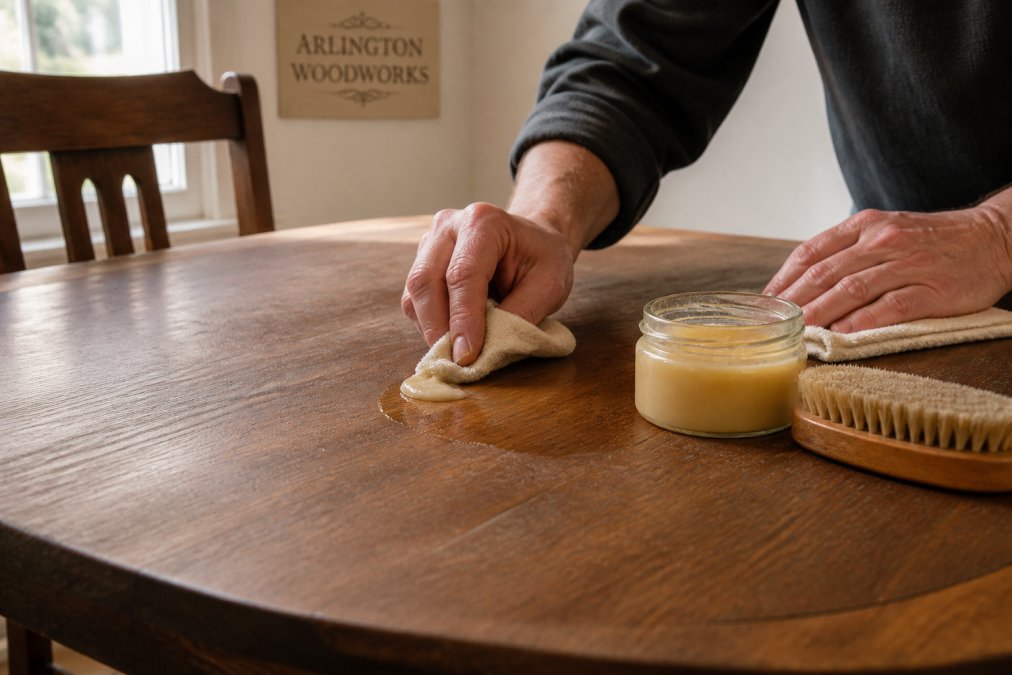
Refinishing removes or rebuilds the existing finish and is a much larger job. Conditioning, by contrast, can help refresh the appearance of appropriate wood surfaces by adding oils, waxes, or both as part of a routine care process.
Here's the key distinction:
- Cleaning removes dirt, grease, and grime.
- Conditioning applies oils, waxes, or both to help enrich the appearance of appropriate wood surfaces and support routine maintenance.
- Polishing buffs to a soft sheen.
- Refinishing removes or rebuilds the existing finish.
If the finish is intact and the furniture simply looks tired or dull, cleaning and conditioning may be enough. Refinishing is more appropriate when the finish itself is failing.
Step 1: Identify the Finish and Condition
Before applying anything, check whether the existing finish appears intact and review the furniture manufacturer’s care instructions when available. Different finishes can respond differently to oils, waxes, cleaners, and solvents. If you are unsure what finish is present, test any care product in a small, inconspicuous area first.
Step 2: Clean the Surface Properly
Dust with a soft cloth, then wipe with mild soap and water on a barely damp rag and dry immediately. Avoid applying conditioner over dirt or grease because buildup can lead to uneven application, cloudiness, or a sticky finish.
Step 3: Apply Conditioner Sparingly
A little goes a long way. Apply a small amount of wood conditioner or balm in a thin, even layer using a soft cloth or applicator. Follow the product manufacturer’s directions for how long to leave it on the surface before buffing.
Step 4: Buff Away All Excess
Beeswax and plant-based oils such as flaxseed oil are commonly used in wood-care products because they can help enrich the appearance of wood while leaving behind a protective wax finish. Arlington Woodworks Artisan Furniture Wood Balm No. 524 is made with flaxseed oil, beeswax, and orange oil and is designed for routine wood care on appropriate surfaces.

Signs Wood Furniture Needs Refinishing, Not Just Conditioning
Conditioning won't fix everything. Watch for these signs a piece has moved past dull into damaged:
- Deep scratches that catch a fingernail
- White water rings that won't lift
- Flaking, peeling, or cracked finish
- Gray, weathered bare wood
- Sticky or gummy patches
- Veneer lifting or splitting
If the finish is still intact and the main issue is a tired, flat, or faded appearance, routine cleaning and conditioning may be enough.
Common Wood Care Mistakes That Keep Furniture Dull
The same four mistakes show up again and again:
Mistake 1: Applying product over dirt. Clean and dry the surface first so the conditioner can be applied evenly without trapping residue or creating a cloudy or sticky finish.
Problem |
Likely Cause |
Fix |
Frequency |
|---|---|---|---|
Flat, tired appearance |
Normal use, cleaning, residue or surface wear |
Clean, condition if appropriate, buff |
As needed; more often on frequently cleaned or heavily used surfaces |
Greasy film |
Too much product |
Wipe off, buff dry |
As needed |
Dusty surface |
Unbuffered excess |
Buff with clean cloth |
As needed |
White rings |
Moisture damage |
Conditioning does not repair water rings |
One-time |
How often should you condition wood furniture?
There is no single schedule that works for every piece. Furniture that is used, cleaned, or wiped down frequently may benefit from conditioning more often than low-use décor. As a general guide, inspect the surface every few months and condition when it begins to look dry, flat, or less vibrant. High-use pieces such as dining tables, kitchen wood, and frequently cleaned furniture may need attention more often, while lightly used pieces may go much longer between applications.
What's the difference between wood balm and furniture polish?
Furniture polishes vary widely. Some are primarily designed to add temporary shine, while wood balms and wax-based conditioners are generally used as part of a broader wood-care routine. A balm like No. 524 applies oils and waxes to the surface and buffs to a soft, natural sheen while helping refresh the appearance of appropriate wood surfaces.
Frequently Asked Questions
What is the difference between cleaning, polishing, and conditioning wood?
Cleaning removes dust, grease, and grime from the surface. Polishing is generally used to improve surface sheen and appearance. Conditioning applies oils, waxes, or both as part of a wood-care routine to help refresh the appearance of appropriate wood surfaces. Dull furniture often benefits from cleaning first, then conditioning if the finish is intact and the surface is suitable. A wood balm made with beeswax and plant-based oils, like Artisan Furniture Wood Balm No. 524, can condition the surface and buff to a soft, natural sheen.
How do I know if my wood furniture needs refinishing or just conditioning?
If the dullness is surface-level and the finish is still intact, routine cleaning and conditioning may be enough to improve the appearance. Signs that furniture may need refinishing include deep scratches, cracks, peeling or flaking finish, bare gray patches, or areas where the topcoat has worn through. A wood balm can help refresh the appearance of appropriate surfaces, but it will not repair structural damage or replace a failing finish.
How often should I condition my wood furniture?
There is no single schedule that works for every piece. Furniture that is used, cleaned, or wiped down frequently may benefit from conditioning more often than low-use décor. As a general guide, inspect the surface every few months and condition when it begins to look dry, flat, or less vibrant. High-use pieces such as dining tables, kitchen wood, and frequently cleaned furniture may need attention more often. Always start with a clean, dry surface and follow the product manufacturer’s directions for application and buffing.
Dull wood does not always need a full refinish. If the existing finish is still intact, thoughtful cleaning, conditioning, and buffing may be enough to bring back warmth and character. Arlington Woodworks Artisan Furniture Wood Balm No. 524 is made with flaxseed oil, beeswax, and orange oil for routine wood care, and can be paired with the Premium Palm Wax Brush for smooth, even application. Explore the Arlington Woodworks wood-care options to find the right fit for your furniture.


