

Wood Care Tips for Beginners in 2026
Last Updated: November 1, 2026
Quick Summary
Good wood care starts with identifying your finish: bare or oil-finished wood accepts conditioners, while film-sealed finishes like polyurethane, lacquer, and varnish only need gentle cleaning and protection. Clean with the least invasive method first, keep moisture off the surface, and condition only when wood looks dry or dull.
- Test any product on a hidden area first, especially on antiques, veneer, and unknown finishes.
- Dust with a soft, dry microfiber cloth and dry any damp-wiped surface immediately.
- Condition oil-finished wood only when it looks dry or dull, not on a fixed schedule.
- Protect film finishes from heat, standing moisture, humidity swings, and abrasion with coasters and felt pads.
- Conditioner cannot fix scratches, water rings, cracks, or failing finish, which need repair or refinishing.
Table of Contents
- Start by Identifying Your Wood Surface and Finish
- How to Clean Wood Furniture Without Damaging the Finish
- Oil-Finished Wood Care: Cleaning, Conditioning, and What to Skip
- Polyurethane Wood Furniture Care: Protecting a Film Finish
- How to Restore Dull Wood Furniture With Conditioning, Not Refinishing
- Common Beginner Wood Care Mistakes to Avoid
- Choose the Right Arlington Woodworks Kit for Your First Project
- Frequently Asked Questions
Start by Identifying Your Wood Surface and Finish
Good wood care starts with understanding what is already on the surface.
Most beginner mistakes happen when every piece is treated the same way, even though the right care routine depends heavily on the existing finish and its condition.
Cleaning, conditioning, polishing, repair, and refinishing are different jobs. No single product should be expected to do all of them.
Bare and Oil-Finished Wood vs. Film-Sealed Finishes
Bare and compatible oil-finished wood can accept conditioning products more readily because there is no continuous film blocking the surface.
Film-sealed finishes such as polyurethane, lacquer, and varnish create a surface layer over the wood. That layer changes how cleaners, conditioners, and moisture interact with the piece.
A conditioning balm may remain closer to the surface on a film finish rather than soaking in the same way it would on bare or oil-finished wood.
What to Do With Unknown, Antique, or Veneered Pieces
When the finish is unknown, treat the piece as delicate until you know more.
Test any product in a hidden area first, follow the furniture or finish manufacturer's guidance when available, and get professional advice before anything irreversible.
For valuable pieces, the Smithsonian's furniture care guidance is a useful preservation-focused reference.
Not sure where your piece fits? Use our Wood Care Selector to help narrow down the right care approach.
How to Clean Wood Furniture Without Damaging the Finish
The safest cleaning routine uses the least aggressive method that gets the surface clean.
Start with dry dusting. Move to a barely damp cloth only when needed, and dry the surface promptly afterward.
Too much moisture is a common cause of damage because water can swell wood fibers, work into seams, cloud some finishes, or contribute to lifting around vulnerable edges.
Match the Cleaner to the Finish
Most cleaning problems come from using a method that does not match the surface.
- Bare or oil-finished wood: Keep moisture minimal. Start with a soft, dry cloth for dust. For sticky spots, use a cloth wrung out until barely damp, then dry the surface immediately. If a mild soap solution is needed, test first and remove any residue afterward.
- Film-sealed finishes such as polyurethane, lacquer, or varnish: You are mainly cleaning the finish on top of the wood. A soft, lightly damp cloth may be appropriate for routine grime, followed by prompt drying. Avoid abrasive pads, scouring powders, and cleaners that can dull or soften the finish.
If you do not know what finish is on the piece, avoid experimenting on a visible surface. Follow the furniture or finish manufacturer's guidance when available, and test any cleaner in a hidden area first.
For antiques, veneer, or valuable pieces, use the least invasive approach and get professional guidance before using stronger cleaners.
Dusting, Spills, and the Right Cloth
- Dust regularly with a soft, dry microfiber cloth.
- For sticky residue, use a barely damp cloth only when appropriate for the finish, then dry immediately.
- Blot spills rather than spreading them across the surface.
- Keep moisture out of seams, joints, and veneer edges.
A Simple Cleaning Decision Path
- Is the surface only dusty? Use a soft, dry cloth.
- Is there light grime or a sticky spot? Try the least-moist method appropriate for the finish.
- Did that fail? Test a mild cleaner in a hidden area before wider use.
- Is the finish unknown, antique, or veneered? Stop before escalating and get guidance.
The goal is not to use the strongest cleaner. It is to use the mildest method that works without changing the finish.
Oil-Finished Wood Care: Cleaning, Conditioning, and What to Skip
Oil-finished wood care is mostly about restraint.
Clean gently, keep unnecessary moisture off the surface, and condition only when the wood looks dry, dull, or noticeably less conditioned rather than following a fixed schedule.
For compatible oil-finished wood, a conditioning balm can help restore warmth, depth, and luster.
Our method for Artisan Furniture Wood Balm No. 524 is simple:
- Start with a clean, completely dry surface.
- Apply a small amount.
- Work it evenly into the wood.
- Let it absorb for a few minutes.
- Buff away all excess.
Skip routine sanding, stripping, harsh solvents, and other aggressive treatments. Those belong to repair or refinishing, not normal maintenance.
If the existing finish is uncertain, test the actual product in a hidden area first and stop if you see dulling, softening, tackiness, cloudiness, or another unexpected change.
Polyurethane Wood Furniture Care: Protecting a Film Finish
Polyurethane wood furniture care is mostly about protecting the finish rather than trying to condition through it.
A polyurethane coating forms a barrier over the wood, so routine care should focus on gentle cleaning, prompt spill cleanup, and avoiding abrasion, excess heat, and standing moisture.
A conditioning balm may remain on the surface rather than absorbing the way it would on bare or oil-finished wood, which is why compatibility matters.
What Can Damage a Film Finish
Common risks include:
- Heat. Hot mugs, dishes, appliances, and electronics can cloud, soften, or mark some finishes. Use coasters and trivets when appropriate.
- Standing moisture. Water left sitting on the surface can cause rings, cloudiness, or damage around worn areas and seams. Blot and dry promptly.
- Repeated humidity changes. Wood expands and contracts as indoor conditions change. Large or repeated swings can stress both the wood and the finish over time.
- Abrasion. Grit, rough pads, and sliding objects can dull or scratch the surface.
A Protection Routine That Fits Film Finishes
- Dust with a soft, dry microfiber cloth.
- Wipe spills promptly using the least moisture needed, then dry the surface.
- Use coasters, trivets, and felt pads under objects that hold heat, collect moisture, or slide.
- Keep the piece away from strong direct heat and repeated moisture exposure.
- If the finish begins looking dull or worn, clean it first and follow the finish manufacturer's guidance before applying anything on top.
When Film-Finish Damage Needs More Than Care
If the coating is cracked, peeling, lifting, deeply scratched, or worn through to bare wood, routine cleaning and conditioning are not enough.
Those problems may require repair or refinishing. For antiques, veneer, or valuable pieces, get professional guidance before sanding, stripping, recoating, or making another irreversible change.
How to Restore Dull Wood Furniture With Conditioning, Not Refinishing
Dull-looking wood does not always need refinishing.
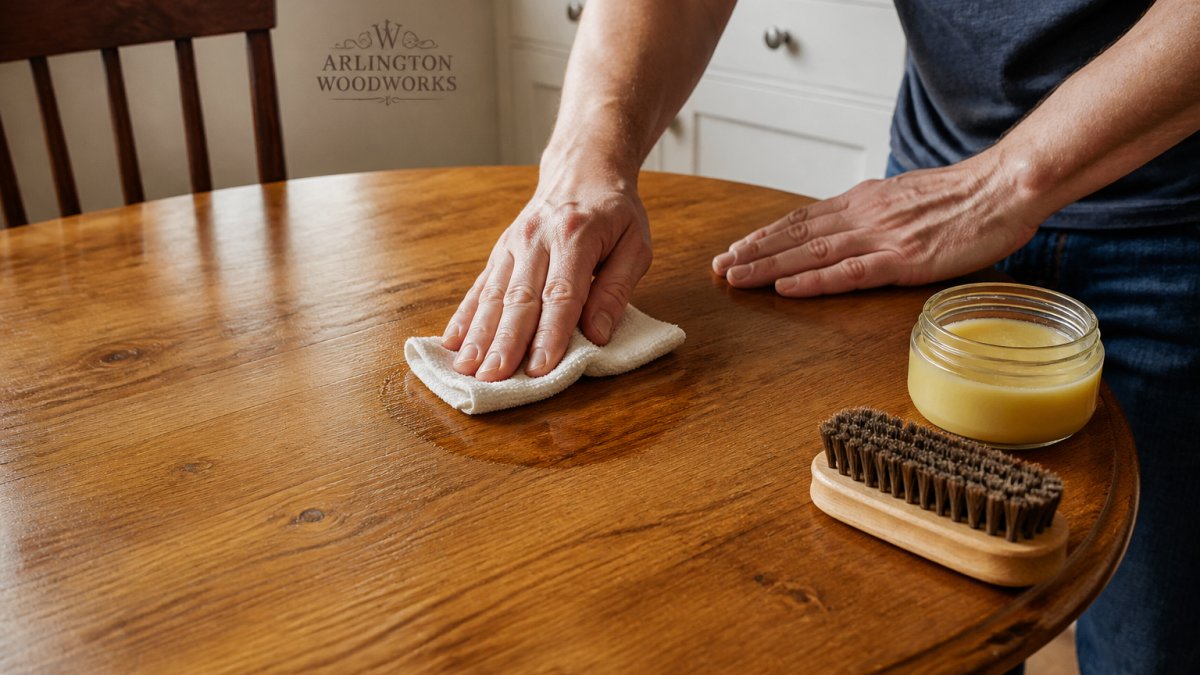
Sometimes the surface simply needs cleaning. In other cases, compatible bare or oil-finished wood may benefit from conditioning to restore warmth, depth, and luster.
Start by cleaning the surface and letting it dry completely. If the finish is compatible and the wood still looks dry or flat, apply a small amount of conditioner, work it evenly into the surface, let it absorb as directed, and buff away all excess.
For a full walkthrough, see our guide on restoring dull wood furniture without refinishing.
Conditioning has limits. It will not repair deep scratches, water rings, cracks, worn-through finish, peeling coatings, or structural damage. Those problems may require repair or refinishing rather than routine care.
Common Beginner Wood Care Mistakes to Avoid
- Over-wetting the surface. Too much water can work into seams, edges, and open grain.
- Using too much product. More balm does not mean more protection; it usually means more residue to remove.
- Applying over dirt or grease. Clean the surface first and let it dry completely before conditioning.
- Failing to buff away the excess. Unbuffed product can remain tacky and attract dust.
- Assuming every finish is compatible. Bare, oil-finished, and film-sealed surfaces do not all respond the same way to cleaners and conditioners.
- Trying to repair damage with conditioner. A conditioning balm can improve the appearance of compatible dry or dull wood, but it will not fix deep scratches, water rings, cracks, worn-through finish, or structural damage.
We cover these mistakes in more detail in our article on common wood furniture care mistakes.
Mistake |
Why It Can Cause Problems |
Better Approach |
|---|---|---|
Over-wetting |
Moisture can enter seams or open grain |
Use the least moisture needed and dry promptly |
Too much product |
Can leave tacky residue |
Start with a small amount and buff all excess |
Skipping the clean |
Can trap grime under product |
Clean and dry before conditioning |
One-size-fits-all care |
Different finishes need different treatment |
Match the method to the finish |
Choose the Right Arlington Woodworks Kit for Your First Project
If you are new to wood care, start small.
Choose one compatible piece, clean it thoroughly, let it dry completely, and test your chosen product in a hidden area before treating the full surface.
For a first project, one jar of Artisan Furniture Wood Balm No. 524 is usually enough to learn the process and see how the wood responds.
If you want a more controlled application on tabletops, carved areas, or detailed surfaces, the Starter Kit pairs No. 524 with our Premium Artisan Palm Wax Brush.
Before you begin, read our step-by-step guide to applying No. 524.

Arlington Woodworks is a veteran-owned maker of small-batch wood care products. Artisan Furniture Wood Balm No. 524 is made with certified organic flaxseed oil, beeswax, and orange oil.
Wood care rewards patience more than products: identify the finish, clean gently, keep moisture controlled, and condition only when the wood actually needs it.
Frequently Asked Questions
How do you care for wood furniture as a beginner?
Start by identifying the existing finish and keeping the routine simple. Dust with a soft cloth, clean spills promptly using the least moisture necessary, and dry the surface afterward. Protect the piece from standing water, excessive heat, abrasion, and large humidity swings. Condition only when the surface is compatible and the wood looks dry, dull, or less conditioned. For compatible bare or oil-finished wood, a small amount of Artisan Furniture Wood Balm No. 524 can help restore warmth, depth, and luster. Test any new product in a hidden area first.
How can you tell whether wood is bare, oil-finished, or sealed?
Look for visual and tactile clues rather than using aggressive diagnostic tests. Bare or oil-finished wood often has a more natural, open-grain appearance and may feel closer to the wood itself. Film-sealed surfaces such as polyurethane, lacquer, and varnish usually have a more continuous coating over the grain and may reflect light more evenly. These clues are not foolproof. If the finish is unknown, antique, veneered, or valuable, avoid water-drop, alcohol, solvent, heat, or fingernail tests. Instead, test the actual product you plan to use in a hidden area and seek professional guidance before any irreversible treatment.
How do you clean wood furniture without damaging the finish?
Start with a soft, dry cloth. If more cleaning is needed and the finish allows it, use a cloth wrung out until barely damp, wipe gently, and dry the surface promptly. Avoid soaking the wood, allowing liquid to collect in seams, using abrasive pads, or applying harsh solvents to an unknown finish. The safest method depends on the existing finish, so follow the furniture or finish manufacturer's guidance when available and test any cleaner in a hidden area first.
How do you moisturize old wood?
Wood does not need water added to it because it looks dry. If compatible bare or oil-finished wood looks dull or has lost some of its warmth and luster, conditioning may help. Clean the surface first and let it dry completely. Then apply a small amount of a compatible conditioner such as Artisan Furniture Wood Balm No. 524, work it evenly into the surface, let it absorb for a few minutes, and buff away all excess. Conditioner can improve the appearance of compatible dry or dull wood, but it will not repair cracks, deep scratches, water rings, worn-through finish, or structural damage.
Can I use Dawn dish soap on a wood table?
A small amount of mild dish soap diluted in water may be appropriate for some finished wood surfaces, but it should not be treated as a universal wood cleaner. The correct method depends on the existing finish. When mild soap is appropriate, use as little moisture as possible, wring the cloth until barely damp, avoid leaving liquid in seams or edges, and dry the surface promptly. For oil-finished, antique, veneered, valuable, or unknown surfaces, follow the furniture or finish manufacturer's guidance and test in a hidden area before cleaning the entire piece.
When does dull or damaged wood need refinishing instead of conditioning?
Conditioning can help when compatible wood is dry, dull, or has lost some of its warmth and luster while the surface itself remains intact. Refinishing or repair may be necessary when there are deep scratches, worn-through finish, peeling or lifting coatings, persistent water damage, cracks, or structural problems. Artisan Furniture Wood Balm No. 524 is a conditioning and protective balm, not a scratch filler, stain remover, or structural repair product. For antiques, veneer, or valuable pieces, get professional guidance before sanding, stripping, recoating, or making another irreversible change.


