

7 Palm Wax Brush Tips for a Flawless Wood Finish
Last Updated: November 7, 2026
Quick Summary
A palm wax brush is a short-handled applicator with dense natural bristles that presses furniture wax or wood balm into the grain instead of wiping it across the surface. Load it lightly, work in thin passes with the grain, then buff away all excess with a clean, dry cloth.
- Choose dense, firm natural bristles and a nickel steel ferrule that resists rust.
- A broad head of roughly 2 to 2.5 inches suits tabletops and flat panels.
- Overlap each pass by about half the brush width and never stop mid-panel.
- Clean with warm water and mild soap, then dry flat with the head slightly raised.
- Test a hidden area first on antiques, veneer, or unknown finishes.
Table of Contents
- What Is a Wax Brush Used For
- Choosing the Best Brush for Applying Furniture Wax
- How to Apply Furniture Wax with a Brush
- Prep Work Before You Load the Brush
- Working Large Surfaces and Detailed Areas
- Brush for Applying Varnish to Wood: What Changes
- Cleaning, Drying, and Storing Your Wax Brush
- Pairing a Palm Wax Brush with Arlington Woodworks Balm
- Frequently Asked Questions
What Is a Wax Brush Used For
A palm wax brush is a short-handled applicator designed to help spread furniture wax, wood balm, and similar products evenly across a wood surface.
Its dense bristles can help work product into open grain, carvings, corners, and other areas that may be harder to reach with a cloth alone.
On broad surfaces, the brush can also provide more direct control over where the product goes and how thinly it is distributed.
How a Palm Brush Differs from a Cloth or Round Brush
A palm brush sits directly in the hand, which gives you a controlled feel over the bristles and makes it easier to guide product across flat surfaces and into detail areas.
A cloth can also work well, especially for simple flat surfaces or final buffing. The main difference is that a brush can reach into grain, edges, carvings, and textured areas with less folding or repositioning.
Round or detail brushes can be useful for curved surfaces, turned legs, trim, and smaller recesses where a wider palm brush may be less precise.
The best applicator depends on the product, the surface, and the level of control you need.
For a broader comparison of brush types, see our guide on how to choose the right brush for furniture finishing.
Choosing the Best Brush for Applying Furniture Wax
A good wax or balm brush should give you control, hold a small amount of product, and help spread it evenly across the surface.
For many furniture waxes and wood balms, dense, moderately firm bristles work well because they can move product across flat areas and into grain, edges, and details without collapsing too easily.
Natural bristles are a common choice, but the best material depends on the product and the brush design. Some synthetic or blended brushes may also work well when they have the right firmness and density.
What to Look For
- Bristle density. Dense bristles can help distribute product more evenly and reach textured areas.
- Bristle firmness. A moderately firm brush gives more control with paste-style products without feeling overly stiff.
- Handle shape. A palm-style handle can make it easier to apply steady pressure and guide the brush across furniture.
- Ferrule and construction. Choose a well-built brush that can tolerate the cleanup method required by the product you use.
Matching Brush Size and Shape to the Project
Brush size should match the area you are working on.
These are useful starting points rather than fixed rules:
- Broad head, around 2 to 2.5 inches: useful for tabletops, dresser tops, cabinet doors, and other larger flat areas.
- Mid-size head, around 1.5 inches: a versatile option for side panels, rails, edges, and medium furniture parts.
- Narrow or rounded head, around 1 inch or less: helpful for carvings, corners, turned legs, recessed panels, and detailed work.
Shape matters too. A flatter head can provide even contact on broad surfaces, while rounded or oval brushes may follow curves and details more easily.
If you work on a mix of furniture styles, one medium palm brush plus a smaller detail brush will cover many common jobs.
Compatibility With Different Products
Palm wax brushes are best suited to paste-style products such as furniture wax, wood balm, salve, and similar conditioners.
For liquid, solvent-heavy, or film-forming finishes, follow the product manufacturer's recommendation for the correct applicator.
When the existing finish is unknown, test the actual product in a hidden area before wider use.
How to Apply Furniture Wax with a Brush
A wax or balm brush works best when you use a small amount of product and spread it evenly across a clean, compatible surface.
The exact method depends on the product, so follow the manufacturer's directions first.
For Artisan Furniture Wood Balm No. 524, use this process:
- Start with a clean, completely dry surface.
- Test a hidden area first when compatibility is uncertain.
- Load the brush lightly with a small amount of product.
- Work the balm evenly across the surface using controlled strokes or circular motions as needed.
- Let it absorb for a few minutes.
- Buff away all excess with a clean, dry cloth.
- The finished surface should feel smooth rather than greasy or tacky.
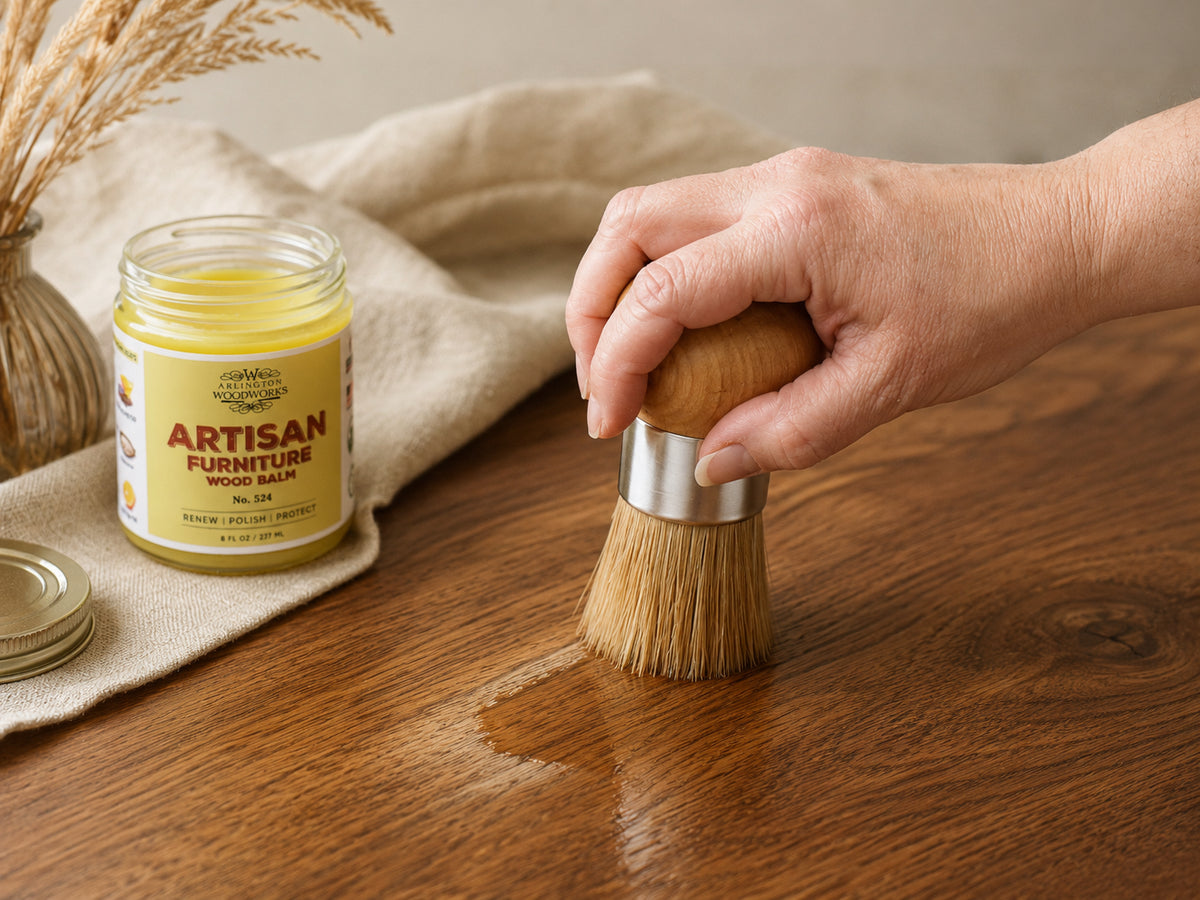
Loading the Brush and Judging Coverage
Start with less product than you think you need.
A light load gives you more control and makes it easier to spread the balm into a thin, even layer. Add more only when the brush stops distributing product effectively.
If you can see a heavy paste-like layer sitting on the surface, spread it out or remove some before continuing.
Avoiding Streaks, Lap Marks, and Buildup
Uneven results can come from several factors, including:
- too much product,
- inconsistent application,
- surface residue or contamination,
- finish incompatibility,
- leaving excess product behind,
- or working the product after it has begun to set.
Work in manageable sections, keep the application thin, and buff away excess according to the product directions.
On carved or detailed areas, pay extra attention to corners and recesses where product can collect.
More product does not automatically mean more protection. A thin, even application is usually easier to control and buff clean.
For a full walkthrough of No. 524, see our step-by-step guide to applying Arlington Woodworks No. 524.
Prep Work Before You Load the Brush
Good surface preparation makes application easier and helps reduce uneven results.
Before loading the brush, make sure the surface is clean, dry, and ready for the product you plan to use.
Use this quick checklist:
- Remove loose dust with a soft, dry cloth.
- Check for sticky residue, grease, or buildup that could interfere with application.
- Make sure the surface is completely dry.
- Test the actual product in a hidden area when compatibility is uncertain.
- Set out a clean buffing cloth before you begin.
Do not apply wax or balm over dirt, grease, or residue and expect the applicator to correct the surface underneath.
If the existing finish is unknown, follow the furniture or finish manufacturer's guidance when available and test the actual product you plan to use in a hidden area before wider application.
For antiques, veneer, heirlooms, or valuable pieces, use the least invasive approach and get professional guidance before sanding, stripping, using solvents, or making another irreversible change.
The Smithsonian's guidance on caring for wooden objects is a useful preservation-focused reference for valuable pieces.
Working Large Surfaces and Detailed Areas
Large flat surfaces and detailed areas benefit from slightly different techniques.
On broad surfaces such as tabletops, dresser tops, and cabinet doors, use light, controlled passes and work in manageable sections. Keep the application thin and even rather than trying to cover the entire surface with a heavy load of product.
On carved details, turned legs, trim, and recessed areas, use the edge of the brush or a smaller applicator when needed. Shorter strokes can help you reach corners and curves without leaving excess product behind.
Pay close attention to low areas where balm or wax can collect.
As you work:
- keep the brush lightly loaded,
- spread product evenly,
- avoid letting excess build up in corners or carvings,
- and buff away remaining product according to the product directions.
For Artisan Furniture Wood Balm No. 524, let the balm absorb for a few minutes, then buff away all excess with a clean, dry cloth.
Brush for Applying Varnish to Wood: What Changes
A brush used for furniture wax or wood balm is not automatically the right tool for applying varnish.
Wax and balm brushes are designed for thicker, paste-style products. Varnish is a film-forming finish, and the correct applicator depends on the specific formulation.
Some varnishes work best with synthetic bristles, some with natural bristles, and others may be designed for foam applicators, pads, or spray application.
The cleanup method also varies. Water-based finishes may clean up with soap and water, while some oil- or solvent-based products require a compatible solvent.
The safest approach is to follow the varnish manufacturer's instructions for:
- applicator type,
- surface preparation,
- coat thickness,
- drying and recoat times,
- cleanup,
- and full cure.
Keep wax or balm brushes separate from brushes used for film-forming finishes so residue from one product does not interfere with another.
If you plan to apply wax over a varnished surface, wait until the varnish has fully cured and confirm that the two products are compatible before proceeding.
Cleaning, Drying, and Storing Your Wax Brush
Clean your wax or balm brush after use so product does not build up in the bristles and affect future application.
The correct cleanup method depends on the product you used, so check the product manufacturer's directions first.
A good general routine is:
- Wipe the bristles on a clean cloth to remove most of the product.
- Wash in warm water with a small amount of mild soap.
- Work the soap through the tufts with your fingers.
- Rinse until the water runs clear.
- Reshape the bristles and dry flat with the head slightly raised.
- Store upright or flat in a dry spot.
Avoid leaving a wet brush standing directly on its bristles, since prolonged pressure can bend or distort the tuft.
For a brush used with Artisan Furniture Wood Balm No. 524, remove as much balm as possible with a clean cloth, then wash the bristles with warm water and mild soap. Avoid unnecessarily soaking the wooden handle or ferrule.
Once completely dry, store the brush in a clean, dry location where the bristles will not be crushed or contaminated by other finishing products.
Pairing a Palm Wax Brush with Arlington Woodworks Balm
A palm wax brush pairs naturally with Artisan Furniture Wood Balm No. 524 because the dense bristles help spread a small amount of balm evenly across compatible wood surfaces and into grain, edges, and detailed areas.
You can see the Premium Artisan Palm Wax Brush here.

Artisan Furniture Wood Balm No. 524 is a wood conditioner and protective finishing balm made with beeswax, certified-organic flaxseed oil, and orange oil. It is not a cleaner, stain remover, or structural repair product.
To use the two together:
- Start with a clean, completely dry compatible surface.
- Load the brush lightly with No. 524.
- Work the balm evenly across the surface using controlled strokes or circular motions as needed.
- Let it absorb for a few minutes.
- Buff away all excess with a clean, dry cloth.
The goal is a smooth, conditioned surface with restored warmth, depth, and a soft natural sheen—not a heavy layer of product sitting on top.
If you want the balm and brush together, the Starter Kit combines No. 524 with the Premium Artisan Palm Wax Brush.

For vintage furniture, you may also want to read our guide on whether furniture wax is worth it for vintage pieces.
A dense palm brush and a thin, even coat go a long way toward a smooth finish.
Frequently Asked Questions
Can you use a wax brush to apply wood balm?
Yes. A palm wax brush works well with a wood balm such as Artisan Furniture Wood Balm No. 524. Dense bristles can help spread balm evenly across flat surfaces and into grain, edges, trim, and detailed areas where a cloth may be less convenient. For No. 524: 1. Start with a clean, completely dry compatible surface. 2. Load the brush lightly. 3. Apply a small amount evenly using controlled strokes or circular motions as needed. 4. Let the balm absorb for a few minutes. 5. Buff away all excess with a clean, dry cloth. Test a hidden area first when compatibility is uncertain.
How do you clean a brush after applying furniture wax?
Remove as much wax or balm from the brush as possible while the product is still soft. For the Premium Artisan Palm Wax Brush used with No. 524: 1. Wipe excess product from the bristles with a clean cloth. 2. Wash the bristles with warm water and mild soap. 3. Work the soap gently through the tufts. 4. Rinse thoroughly. 5. Reshape the bristles. 6. Dry the brush flat with the head slightly raised. Do not leave balm in the bristles after use. The flaxseed oil in No. 524 cures over time and can harden the bristles if the brush is not cleaned properly. Avoid unnecessarily soaking the wooden handle, and store the brush only after it is completely dry.
What is the best brush for applying furniture wax?
A dense, moderately firm brush with a comfortable handle is a good choice for many furniture waxes and wood balms. Firm bristles provide control with paste-style products, while dense tufts can help distribute product evenly and reach grain, carvings, trim, and recessed areas. Palm-style handles are especially useful on furniture because they place your hand directly over the bristles and provide good control on broad surfaces. The Premium Artisan Palm Wax Brush uses dense natural white bristles, a nickel steel ferrule, and a flat-top palm design intended for applying furniture waxes and wood balms such as No. 524.
What type of brush is best for applying varnish to wood?
The best brush depends on the specific varnish. Water-based, oil-based, and other film-forming finishes can have different applicator requirements. Depending on the product, the manufacturer may recommend synthetic bristles, natural bristles, foam applicators, pads, or another application method. Use a dedicated brush for varnish rather than a brush that has been used with wax or balm, since residue can interfere with a film-forming finish. Follow the varnish manufacturer's instructions for applicator type, preparation, coat thickness, drying and recoat times, and cleanup.


