

9 Habits That Stop Wood Cutting Board Cracks
Quick Summary
Cutting board cracks mostly come from soaking, dishwashers, leaving boards wet, and drying them near heat. Clean promptly with warm water and mild soap, dry the board fully on its edge with good airflow, store it away from heat and sun, and condition it when the wood looks dry or dull.
- Rinse the board quickly with warm water and mild dish soap instead of soaking it.
- Never run a wood cutting board through the dishwasher; wash it by hand.
- Dry the board fully after each wash, standing it on its edge with good airflow.
- Keep the board away from stoves, radiators, and direct sun while it dries and in storage.
- Condition the board when the wood looks dry or dull rather than on a fixed calendar.
Table of Contents
- Why Wood Cutting Boards Crack
- Clean Your Wood Cutting Board the Right Way
- Dry Your Board Completely After Every Wash
- How to Oil a Wooden Cutting Board
- Storage and Daily Habits That Protect Your Board
- What to Do If Your Board Already Has a Crack
- Choosing Food-Safe Adhesives for Board Repairs
- Keep Your Cutting Board in Service: Next Steps
- Frequently Asked Questions
Why Wood Cutting Boards Crack
Wood cutting boards naturally expand and contract as they take on and release moisture. Repeated washing, drying, changes in humidity, and exposure to heat can create uneven movement across the board.
Cracks are more likely when those moisture changes happen quickly or unevenly.
Common habits that increase stress on a wooden cutting board include:
- soaking or leaving the board submerged in water,
- putting it in the dishwasher,
- leaving one side wet while the other dries,
- storing or drying it near strong heat,
- or exposing it to direct sun for long periods.
The goal is not to keep the board at one exact moisture level. It is to avoid extreme or uneven wetting and drying cycles.
Habit |
Why it can stress the board |
Better habit |
|---|---|---|
Soaking or submerging |
Allows the wood to take on a large amount of moisture |
Wash promptly and avoid prolonged soaking |
Dishwasher use |
Combines water, heat, and rapid drying |
Wash by hand |
Leaving the board wet |
Can create uneven moisture across the board |
Dry thoroughly with airflow around both faces |
Drying near heat or sun |
Can cause rapid, uneven moisture loss |
Dry at normal room conditions |
Neglecting surface care |
Can leave heavily used wood looking rough or worn |
Condition when the board’s condition indicates it needs attention |
Good daily habits reduce unnecessary moisture swings and help the board remain more dimensionally stable over time.
Clean Your Wood Cutting Board the Right Way
Clean a wooden cutting board promptly after use with warm water, mild dish soap, and a soft sponge or cloth.
Wash both faces and the edges, then rinse away soap and food residue without leaving the board submerged or sitting in standing water.
Avoid prolonged soaking. Wood can take on moisture unevenly when it remains in water, which can increase the risk of warping or cracking as it dries.
For light, non-food-contact dust or residue, a damp cloth may be enough. After food preparation, clean the board using an appropriate food-contact cleaning method.
For sanitation or food-safety concerns, follow authoritative guidance from sources such as USDA, FDA, CDC, or recognized university extension programs rather than relying on home remedies.
After cleaning, move directly to thorough drying so moisture does not remain trapped on one face or edge.
Dry Your Board Completely After Every Wash
Dry a wooden cutting board thoroughly after every wash.
Start by wiping away surface water with a clean towel. Then place the board where air can reach both faces and the edges so it can continue drying evenly.
Standing the board on its edge or using a rack can help improve airflow. Avoid leaving it flat on a wet counter, in a damp sink, or anywhere moisture can remain trapped underneath.
Keep the board away from direct sun, radiators, stovetops, heating vents, or other strong heat sources while it dries. Rapid or uneven drying can increase dimensional stress and contribute to warping or cracking.
Before storing the board, make sure it no longer feels damp and that both faces have had adequate airflow.
Consistent drying habits are one of the simplest ways to reduce unnecessary moisture swings and help a wooden board stay stable over time.
How to Oil a Wooden Cutting Board
Conditioning can help a compatible wooden cutting board maintain a smoother surface and a richer, more even appearance.
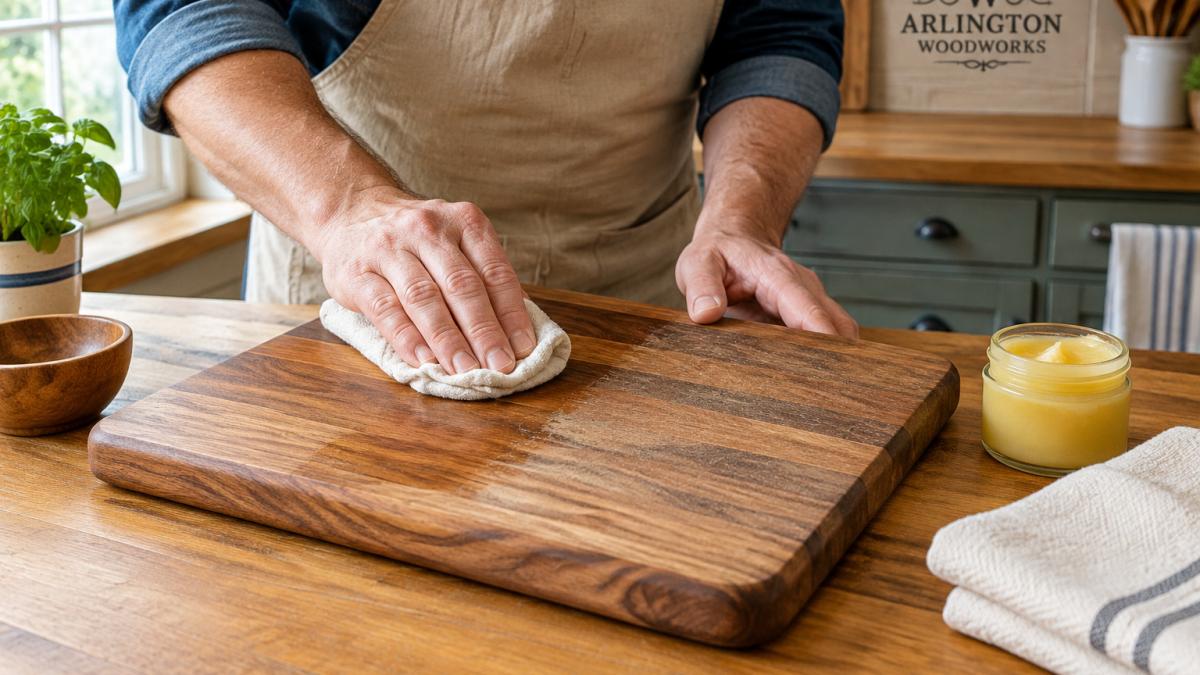
Use a wood-care product that is appropriate for food-contact surfaces when that use matters, and follow the product manufacturer's directions.
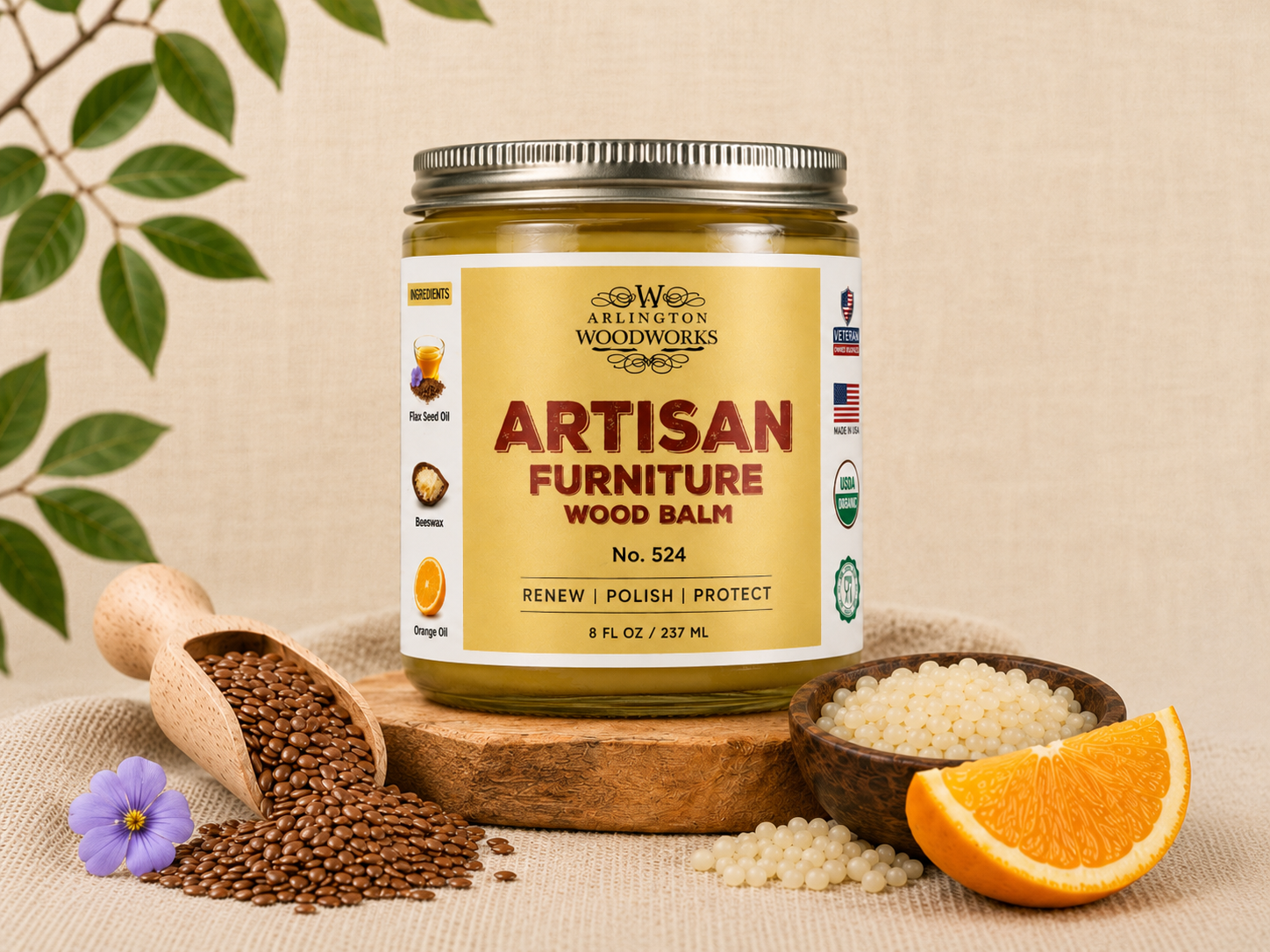
Artisan Furniture Wood Balm No. 524 is made with certified-organic flaxseed oil, beeswax, and orange oil. It is an oil-and-wax conditioning and protective finishing balm, not a cleaner, sanitizer, or repair product.
For No. 524:
- Start with a clean, completely dry board.
- Test a small hidden area first when compatibility is uncertain.
- Apply a small amount with a clean cloth or appropriate applicator.
- Spread the balm evenly across the surface.
- Let it absorb for a few minutes.
- Buff away all excess with a clean, dry cloth.
The finished surface should feel smooth rather than greasy or tacky.
Condition the board based on its actual condition and use rather than a fixed calendar. If the surface still looks even and feels smooth, it does not need more product simply because time has passed.
Storage and Daily Habits That Protect Your Board
Daily habits have a major effect on how well a wooden cutting board holds up over time.
Store the board in a dry location with normal room-temperature airflow. Keep it away from direct sun, stovetops, radiators, heating vents, and other strong heat sources.
Good habits include:
- wiping up spills promptly,
- cleaning the board after use,
- drying it thoroughly before storage,
- storing it so air can reach both faces,
- keeping it away from prolonged heat and direct sunlight,
- and conditioning it when the surface begins to look dull, rough, or worn.
For customers who want both the balm and a dedicated applicator, the Starter Kit pairs Artisan Furniture Wood Balm No. 524 with the Premium Artisan Palm Wax Brush.
The goal is consistency: avoid prolonged soaking, trapped moisture, rapid drying, and unnecessary over-application.
What to Do If Your Board Already Has a Crack
A crack changes the question from routine maintenance to condition and safety.
Start by cleaning and drying the board thoroughly, then inspect the damaged area. Small surface checks may be cosmetic, but deeper or spreading cracks can affect cleanability and structural stability.
Pay particular attention to cracks that:
- extend deeply into the board,
- run through the full thickness,
- separate glued sections,
- continue to widen,
- trap food or moisture,
- or make the board difficult to clean completely.
Do not use wood conditioner or balm as a crack repair. Conditioning can improve the appearance and feel of compatible wood, but it does not close structural gaps or restore failed joints.
If the damage affects the board’s structure or makes the surface difficult to clean, stop using it for food preparation until you have guidance from the board manufacturer or a qualified woodworker.
When there is uncertainty about sanitation or continued food use, err on the side of caution rather than trying to solve structural damage with routine wood-care products.
Choosing Food-Safe Adhesives for Board Repairs
Not every cracked cutting board should be repaired. A repair makes the most sense when the damage is limited, the board remains structurally sound, and the joint can be restored cleanly.
If adhesive is appropriate, use a wood glue specifically suited to cutting-board construction and follow the manufacturer's directions for application, clamping, and cure time.
In my own shop, I use Titebond III Ultimate Wood Glue when making cutting boards. Titebond states that Titebond III is approved for indirect food contact and recommends it for cutting-board construction.
That does not mean every cracked board should simply be glued back together.
Avoid DIY repairs when:
- the crack is deep or irregular,
- the board has separated extensively,
- damaged areas can trap food or moisture,
- the board is warped or structurally unstable,
- or you are unsure whether the repaired surface can be cleaned effectively.
A failed glue joint between otherwise sound pieces may be repairable, while extensive cracking or structural deterioration may justify replacement instead.
When a repair is appropriate, follow the adhesive manufacturer's directions exactly and allow the joint to cure fully before returning the board to use.
Keep Your Cutting Board in Service: Next Steps
The best way to help a wooden cutting board last is to control the everyday habits that create unnecessary stress.
Focus on the basics:
- clean it promptly after use,
- avoid prolonged soaking,
- dry it thoroughly with airflow around both faces,
- keep it away from strong heat and direct sun,
- inspect cracks or failed joints before they become larger problems,
- and condition the surface when its actual condition shows that it needs care.
Artisan Furniture Wood Balm No. 524 can be used on compatible cutting boards when used as directed. It helps condition the wood and restore warmth, depth, and a soft natural sheen, but it does not repair cracks, failed glue joints, or structural damage.
For routine care, use a small amount on a clean, completely dry board, allow it to absorb for a few minutes, and buff away all excess.
If the board develops damage that affects cleanability or structural stability, address that issue before returning to routine conditioning.
Frequently Asked Questions
How do I keep my wooden cutting board from cracking?
Wash the board by hand with warm water and mild dish soap, avoid prolonged soaking, and dry it thoroughly after each use. Store it where air can reach both faces and keep it away from strong heat sources and direct sun. Condition the board when the surface begins to look dull, rough, or worn rather than following a rigid calendar. Consistent cleaning, drying, storage, and conditioning habits help reduce the repeated moisture swings that can contribute to cracking and warping.
Is it okay to use a cracked wooden cutting board?
It depends on the location and severity of the damage. A small surface check may be cosmetic, while a deeper crack can affect cleanability or structural stability. Stop using the board for food preparation if the crack traps food or moisture, extends through the board, separates glued sections, or makes the board difficult to clean thoroughly. If you are unsure whether the board can remain in food use, consult the manufacturer or a qualified woodworker.
Can food-safe wood glue repair a cracked cutting board?
Some cutting-board repairs can be appropriate when the damage involves a repairable joint and the surrounding wood remains sound. In my own shop, I use Titebond III Ultimate Wood Glue when making cutting boards. For any adhesive used on a cutting board, confirm that the manufacturer considers it appropriate for the intended food-contact application and follow its directions for application, clamping, and cure time. Glue is not a substitute for replacing a board with extensive cracking, structural instability, or damage that makes the surface difficult to clean.
How often should I oil a wooden cutting board?
There is no universal schedule. Condition the board based on its actual condition, use, washing frequency, and environment. Signs that it may be ready for conditioning include a surface that looks dull, pale, rough, or worn compared with its normal appearance. For Artisan Furniture Wood Balm No. 524, start with a clean, completely dry board, test a hidden area when compatibility is uncertain, apply a small amount evenly, allow it to absorb for a few minutes, and buff away all excess. If the surface still looks even and feels smooth, more product is not automatically necessary just because a certain amount of time has passed.


